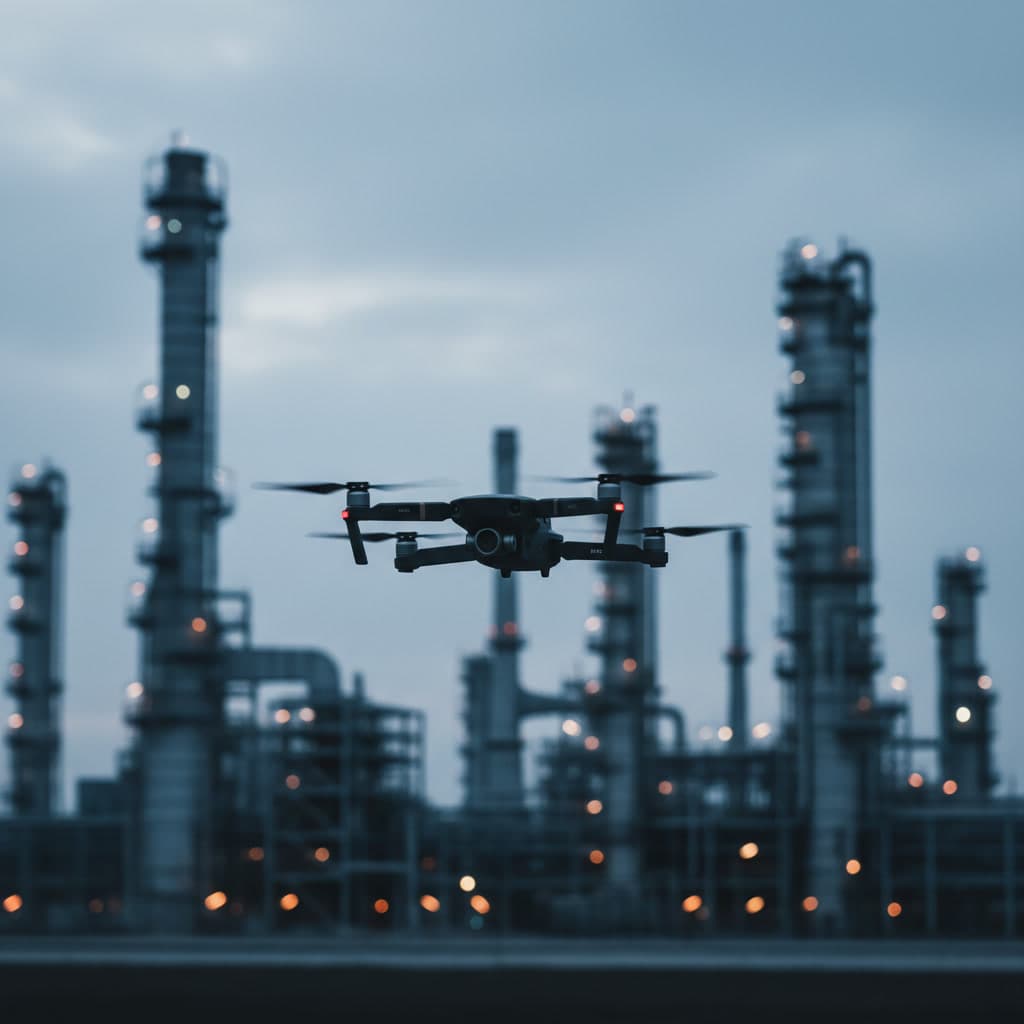

The Algorithmic Revenue Inversion: When Code Finally Eclipsed Concrete
For fifty years, the immutable law of retail physics was that revenue growth required physical expansion. To sell 10% more volume, you needed roughly 10% more shelf space, 10% more warehouse square footage, and 10% more human labor. That linear correlation has officially broken.
The recent confirmation that Amazon’s annual revenue has eclipsed Walmart’s is not merely a changing of the guard; it is a change in the fundamental physics of commerce. We call this the Algorithmic Revenue Inversion. It marks the precise moment where predictive, AI-driven scale became mathematically superior to physical logistical dominance.
While Walmart built an empire on the mastery of moving atoms—optimizing the supply chain to shave cents off the dollar—Amazon has won by digitizing the decision layer itself. The victor is no longer the entity with the most efficient trucks, but the one with the most accurate prediction models.
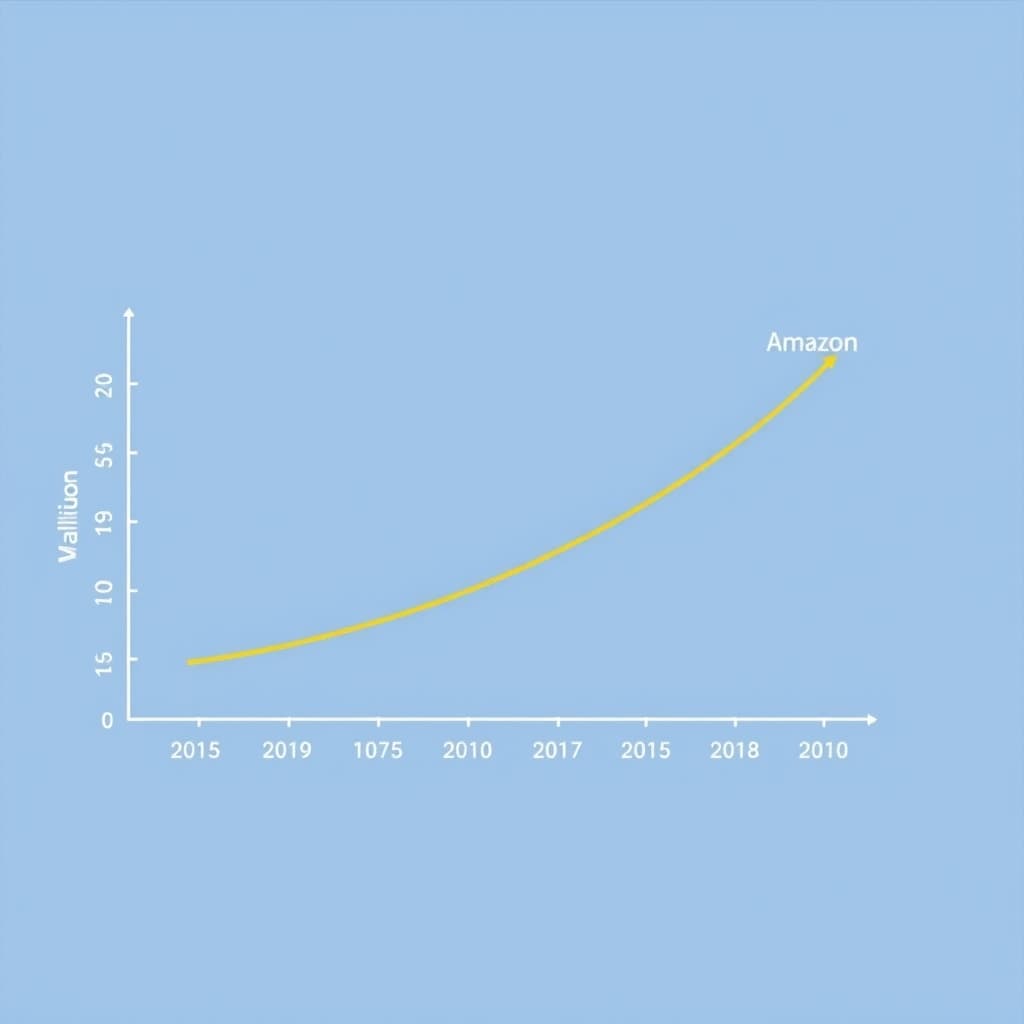
The Decoupling: How Compute Power Outpaced Square Footage
The defining characteristic of the Algorithmic Revenue Inversion is the decoupling of asset base from revenue generation. Historically, retail operated on thin margins where Return on Invested Capital (ROIC) was capped by the cost of real estate and inventory holding.
Amazon broke this ceiling by introducing high-margin, zero-marginal-cost revenue streams that subsidize its physical operations. When a consumer buys a physical product on Amazon, the transaction is supported by three distinct algorithmic layers that do not exist in a traditional physical-first model:
- The Cloud Subsidization: AWS provides the cash flow moat that allows the retail arm to operate at margins that would bankrupt a brick-and-mortar competitor.
- The Marketplace Flywheel: Third-party sellers bear the inventory risk while Amazon collects the toll (referral fees and fulfillment fees).
- The Prediction Dividend: AI models determine inventory placement before the customer places an order, reducing the "cost to serve" below what is physically possible for a reactive supply chain.
This creates a compounding effect. While a physical retailer must build a new store to reach a new demographic, an algorithmic retailer simply retrains a model to target a new intent signal. The marginal cost of the latter approaches zero.
Predictive Logistics and the End of Reactive Supply Chains
The era of "Just-in-Time" (JIT) logistics—the gold standard of the 20th century—is over. JIT was reactive; it waited for a signal (a purchase) to trigger a response (restocking). The new standard is Anticipatory Logistics.
We are witnessing a shift where supply chains are no longer managed by human procurement officers using spreadsheets, but by generative agents that negotiate, purchase, and route inventory autonomously.
From "Before-You-Ask" to "Before-You-Know"
Amazon’s patent portfolio has long hinted at "anticipatory shipping"—moving goods to local fulfillment centers before a customer clicks "buy." In 2026, this is no longer experimental; it is the baseline. Deep learning models ingest petabytes of data—weather patterns, local search trends, macroeconomic indicators—to position inventory with 95%+ accuracy.
The implication is severe for legacy players. If Walmart’s supply chain reacts to Monday’s sales data on Tuesday, and Amazon’s supply chain predicted Monday’s demand last Friday, the efficiency gap becomes insurmountable. The reactive player is always paying for expedited shipping or carrying excess safety stock, while the predictive player operates with surgical precision.
Case Study: The Generative Procurement Agent
Consider the backend transformation. Large Language Models (LLMs) fine-tuned on supply chain dynamics are now handling vendor negotiations. Instead of a human buyer emailing five suppliers for quotes on cardboard packaging, an autonomous agent engages 500 suppliers simultaneously, optimizing for price, speed, and sustainability constraints in real-time. This collapses the procurement cycle from weeks to minutes, unlocking liquidity that physical-first retailers have tied up in administrative friction.
The High-Margin Ad Layer: Monetizing Intent Over Inventory
Perhaps the most critical factor in this revenue inversion is the shift from retail-as-distribution to retail-as-media.
Physical shelves are finite. Digital shelves are infinite, but attention is scarce. By turning its store into a search engine, Amazon created a high-margin advertising business that rivals the GDP of small nations. This is not just "extra money"; it is a structural advantage.
When a brand pays to boost a product on Amazon, that revenue flows almost entirely to the bottom line (margins often exceeding 50%), whereas selling the actual product might yield 5%. This allows the algorithmic retailer to lower prices on the physical goods, effectively using the product as a loss leader to capture the valuable data and ad revenue attached to the transaction.
The Math of the Media Layer:- Traditional Retail: Profit = (Price - Cost of Goods Sold) - Overhead.
- Algorithmic Retail: Profit = (Price - COGS) + Ad Revenue + Subscription Revenue (Prime) - Overhead.
The presence of the Ad Revenue variable allows the algorithmic player to remain profitable even when the physical transaction is margin-neutral or negative.
Legacy Response: The "Edge Node" Pivot
Physical giants are not standing still. Walmart and others are aggressively pivoting to a hybrid model, attempting to weaponize their one remaining advantage: proximity.
The strategy is to convert the liability of thousands of stores into an asset by treating them as "edge computing fulfillment nodes." If the store is a warehouse, the last-mile cost is lower than shipping from a centralized hub.
The Strategic Trade-Off: Pure Play vs. Hybrid Edge
Retail leaders currently face a binary strategic choice. Each path carries distinct capital risks.
Outlook 2026-2030: The Era of Autonomous Commerce
As we look toward the end of the decade, the Algorithmic Revenue Inversion will accelerate into Autonomous Commerce.
We are approaching a point where a significant percentage of "consumers" will not be humans, but AI agents acting on behalf of humans. Your personal AI will notice you are running low on coffee, compare prices across three platforms, negotiate a bulk discount, and place the order without you ever opening an app.
In this environment, visual branding and shelf placement matter less than API accessibility and algorithmic pricing logic. The companies that win will be those that optimize their data structures to be read by machines, not eyes.
Regulatory Headwinds: This dominance attracts scrutiny. We expect the FTC and EU regulators to shift focus from "monopoly market share" to "algorithmic collusion." If pricing algorithms across the industry inadvertently coordinate to raise prices (without human communication), regulators will be forced to intervene, potentially capping the efficiency gains of the algorithmic model.
FAQ
What specifically defines 'Algorithmic Revenue Inversion'? It is the economic tipping point where a company's revenue growth becomes primarily driven by software scalability, data network effects, and AI efficiency rather than the linear addition of physical stores, inventory, or human labor.
Does this mean physical retail is obsolete? No, but its function changes. Physical retail moves from being the primary driver of growth to serving as a logistical support layer (last-mile fulfillment and customer experience) for the dominant digital brain. The store becomes a node in the network, not the network itself.
Sources
Loading comments...
Related
View all →