

The $35 Billion Breakthrough: How Nasdaq and Talos Mastered TradFi Collateral Tokenization
In March 2026, the U.S. Securities and Exchange Commission formally approved Nasdaq's framework to trade tokenized stocks using distributed ledger rails, validating a profound infrastructural shift. Immediately following this regulatory milestone, Nasdaq and digital asset infrastructure provider Talos integrated their platforms to target over $35 billion in trapped institutional collateral. Analyzing this integration through the strict lens of capital velocity and enterprise post-trade architecture reveals that Wall Street’s adoption of blockchain has permanently pivoted from speculative trading toward foundational backend plumbing upgrades.
The Mechanics Behind the $35 Billion Liquidity Unlock
Bypassing Legacy Settlement Silos
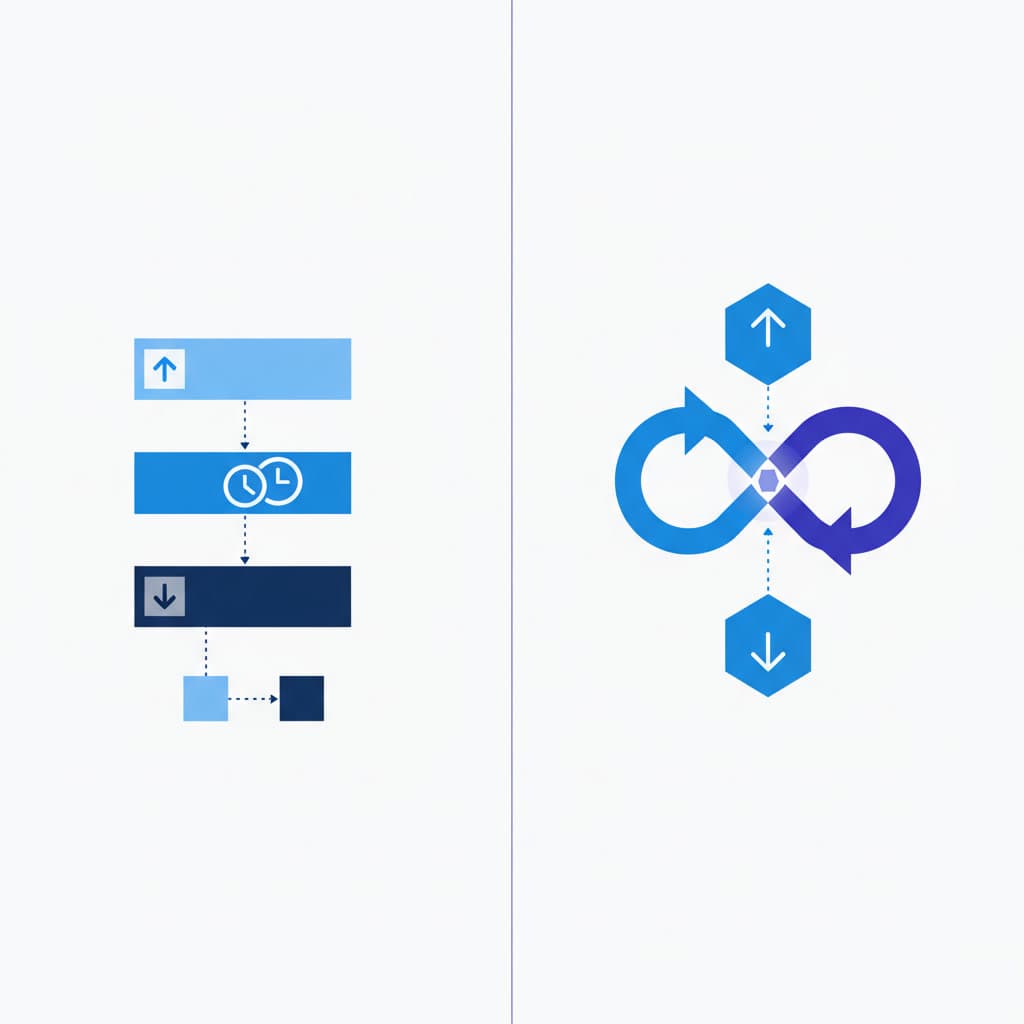
A recent internal analysis by Nasdaq revealed that approximately 25% of institutional collateral—exceeding $35 billion—is currently locked in corrective, non-interest-bearing buffers. These buffers exist entirely as a defense mechanism against settlement failures and legacy latency. By integrating Talos’s digital asset infrastructure directly into Nasdaq’s Calypso system, financial institutions manage both traditional and digital collateral within a single pane of glass. This architectural consolidation eliminates the need for separate operational silos, allowing firms to view their on-chain and off-chain exposures concurrently without bridging disparate databases.
Smart Contracts as Automated Collateral Managers
Moving collateral from a static database entry to a programmable token allows smart contracts to assume the role of automated collateral managers. When market volatility triggers a margin call, legacy systems rely on batch-processed messaging and manual reconciliations that take hours to resolve. Tokenized environments execute these logic parameters autonomously. If a portfolio's loan-to-value ratio drops below a predefined threshold, the smart contract programmatically liquidates or transfers the exact required collateral fraction in real time, bypassing human intervention and drastically reducing counterparty risk.
Nasdaq and Talos: Bridging Wall Street and On-Chain Architecture
Institutional-Grade Key Management at Scale
Capturing the benefits of tokenized collateral requires infrastructure that mirrors the operational rigor of mainstream asset classes. Talos addresses this by deploying enterprise-grade multiparty computation (MPC) wallets combined with strict role-based access controls. MPC fragments cryptographic private keys across multiple secure servers, ensuring no single point of failure exists internally or externally. When integrated with Nasdaq's Trade Surveillance platform, this setup provides institutional-grade compliance, proactively flagging patterns associated with spoofing or wash trading before transactions achieve finality on the ledger.
Real-Time Margin Optimization Strategies
The convergence of Talos’s execution tools with Calypso’s margin engines enables active optimization of balance sheets. Prime brokers and hedge funds traditionally over-collateralize positions because they lack real-time visibility into cross-asset risk. With a unified data model, a firm can instantly substitute highly liquid tokenized U.S. Treasuries for cash equivalents across different venues and jurisdictions. This interoperability allows treasury desks to deploy capital exactly where it generates the highest yield, rather than leaving it dormant to satisfy fragmented margin requirements.
Understanding the structural shift requires mapping the incentives driving this transition across the financial ecosystem:
Why Capital Efficiency is the True Blockchain Catalyst
Eradicating T+1 Friction Points
While the shift to T+1 settlement reduced exposure windows, it simultaneously compressed the timeframe institutions have to locate and deliver securities, leading to an uptick in fail rates. Atomic settlement—where the transfer of an asset and the payment occur simultaneously—completely eradicates these friction points. Tokenized mechanisms guarantee that delivery versus payment (DvP) happens instantly. The $35 billion in trapped capital is directly correlated to the inefficiencies of the T+1 cycle; removing the delay removes the need for the capital buffer entirely.
Enabling Cross-Border Liquidity Pooling
Traditional collateral is heavily constrained by geographic and jurisdictional boundaries, often requiring local custodians and correspondent banking networks. Tokenization abstracts the asset from its physical jurisdiction, creating a globally accessible liquidity pool. A trading desk in London can pledge tokenized Japanese equities to secure a dollar-denominated loan in New York within seconds. This borderless mobility fundamentally alters how global banks manage intraday liquidity, reducing reliance on expensive unsecured overnight funding.
Navigating the Regulatory Landscape for Digital Assets
Aligning with SEC and CFTC Custody Rules
The March 2026 SEC approval for Nasdaq to pilot trading in tokenized versions of equities provides the regulatory air cover necessary for institutional scaling. This pilot, involving the Depository Trust Company (DTC), demonstrates a compliant pathway for minting and burning tokenized securities. Aligning with stringent SEC and CFTC custody rules requires platforms to prove that digital assets are held in segregated, verifiable environments. The Nasdaq-Talos integration addresses these mandates by layering traditional trade surveillance over blockchain-based asset movements, satisfying regulators' demands for market integrity.
Ensuring Bankruptcy Remoteness in Digital Form
A critical constraint in digital asset adoption is legal certainty during a default scenario. Institutional participants must guarantee that tokenized collateral is legally recognized as bankruptcy-remote, meaning it cannot be claimed by the creditors of the platform or custodian. Structuring these digital representations requires precise legal frameworks that tie the on-chain token directly to the off-chain asset's property rights. By utilizing established platforms like Calypso, Nasdaq ensures that the digital workflows map directly to existing, legally tested collateral agreements, preserving the protective legal wrappers around the assets.
Projecting the Tokenized Repurchase Markets Through 2030
Expansion into Highly Illiquid Asset Classes
The initial wave of tokenization focused on highly liquid assets like U.S. Treasuries and major equities. The next phase will see the infrastructure expand to encompass highly illiquid asset classes, such as private credit, commercial real estate, and syndicated loans. Tokenizing these assets allows them to be fractionalized and pledged as collateral, unlocking entirely new liquidity vectors for asset managers. As pricing oracles become more sophisticated, the haircut models for these illiquid tokens will standardize, making them viable for routine margin posting.
The Path to Trillion-Dollar On-Chain Repo Volumes
The traditional repurchase agreement (repo) market processes trillions of dollars daily, yet relies on antiquated collateral upgrade and downgrade workflows. As the Nasdaq-Talos integration proves the viability of automated margin management, the repo market is the logical next target for wholesale tokenization. By 2030, programmable repo contracts could dominate overnight lending, automatically adjusting interest rates and collateral requirements based on real-time market data. This evolution will transition the trillion-dollar repo market from a batch-processed operational burden to a continuous, algorithmic liquidity engine.
If major central banks unexpectedly accelerate the deployment of wholesale Central Bank Digital Currencies (wCBDCs) with built-in, mandate-enforced atomic settlement networks, the immediate demand for private, exchange-led tokenization bridges like the Nasdaq-Talos initiative could diminish. A state-sponsored, interoperable ledger natively supporting both cash and securities would alter the competitive dynamics of post-trade infrastructure, potentially rendering third-party integration layers obsolete.
Institutional blockchain adoption has definitively pivoted from speculative trading toward foundational backend plumbing upgrades. The unlocking of massive illiquid reserves by major financial entities validates the technology's core utility. Market participants should monitor legacy clearinghouses as they inevitably adapt to these instantaneous settlement standards.
FAQ
What exactly is collateral tokenization in traditional finance? It involves creating immutable digital representations of traditional assets, such as US Treasuries or equities, on a distributed ledger. This allows financial institutions to transfer ownership instantly and programmatically, entirely bypassing legacy settlement delays.
How does this infrastructure maintain security for billions in assets? Providers deploy enterprise-grade multiparty computation (MPC) wallets combined with strict permissioned ledger environments. This architecture guarantees that only verified, KYC-compliant institutional participants can interact with the tokenized capital.
Sources
- Nasdaq Official: Post-Trade Modernization
- Talos Official: Institutional Digital Asset Trading
- Ledger Insights: Nasdaq, Talos partner on tokenized collateral, trade surveillance
- PYMNTS: Nasdaq Teams With Talos on Tokenized Collateral Management
- Finance Magnates: Nasdaq and Talos Partner on Tokenised Collateral Following SEC Nod
- Bitget: SEC Approves Tokenized Stocks on Nasdaq
Loading comments...
Related
View all →
Crypto
Wall Street Meets Blockchain: Inside the SEC Approval of Nasdaq Tokenized Securities
March 19, 2026
...

Crypto
The Sovereign Credibility Hedge: Decoding the $1 Billion Institutional Flight to Bitcoin
March 17, 2026
...

Crypto
Sovereign Blackout Liquidity: How Nation-States Move Capital When the Grid Goes Dark
March 14, 2026
...

Crypto
The Silent TradFi Revolution: How Legacy Payments Are Normalizing Blockchain Infrastructure
March 12, 2026
...