
Crypto
The $35 Billion Breakthrough: How Nasdaq and Talos Mastered TradFi Collateral Tokenization
March 24, 2026
...


Seventy-four billion dollars in automated, price-insensitive capital will hit the digital asset market annually if just 1% of US 401(k) contributors allocate a 5% sleeve to cryptocurrencies. This specific metric alters market microstructure permanently. The White House has officially cleared the regulatory pathways for integrating digital assets into the $14 trillion defined contribution ecosystem, transforming retirement savings into a structural bid under major layer-1 protocols. Evaluating this mandate requires looking past political rhetoric and examining the realities of ERISA compliance and institutional order flow. Drawing on over 15 years of analyzing institutional asset management and market plumbing, the following analysis deconstructs the exact mechanisms behind this policy shift, the timeline for capital deployment, and the impending liquidity shock to the crypto ecosystem.
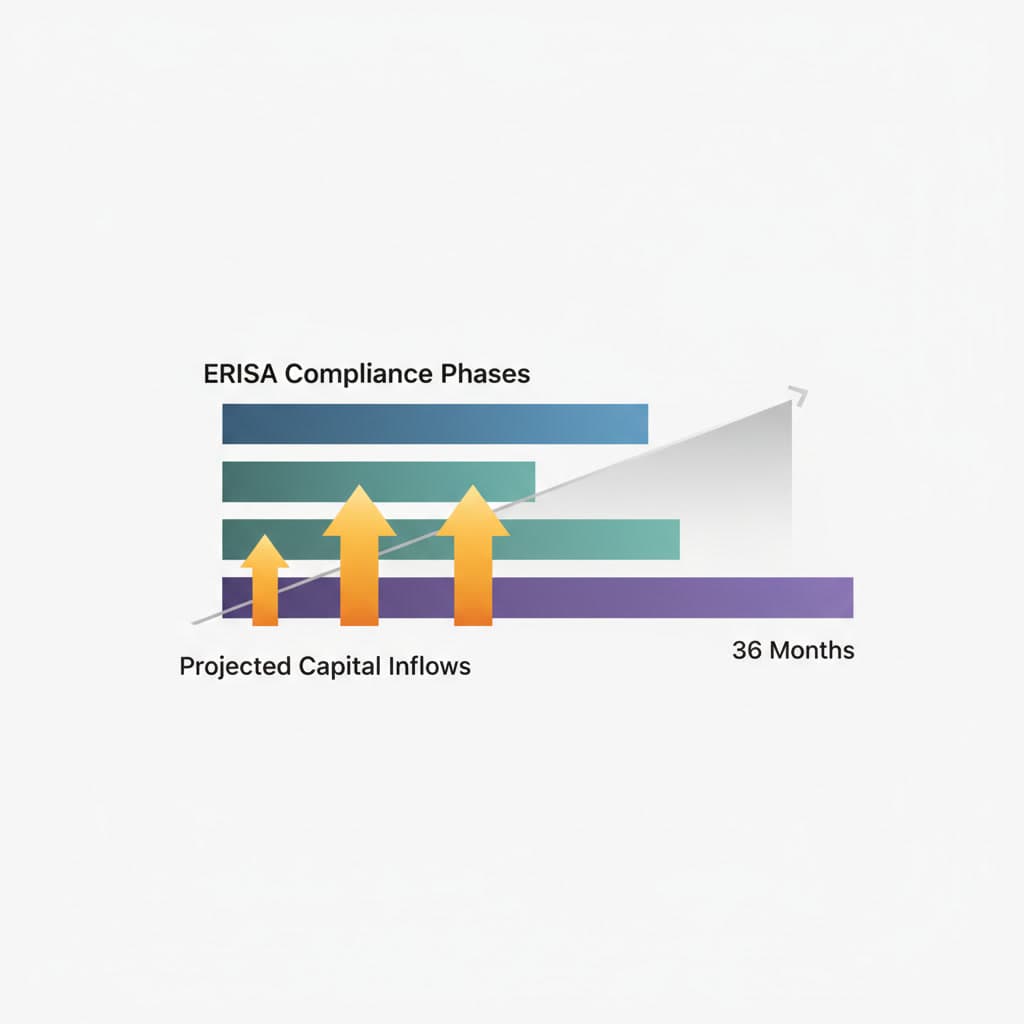
The regulatory posture surrounding retirement accounts and digital assets has reversed with whiplash-inducing speed. In early 2022, the Department of Labor (DOL) issued a compliance release demanding fiduciaries exercise "extreme care" before adding cryptocurrencies to 401(k) menus. This effectively acted as a soft ban, wielding the threat of targeted audits to chill institutional adoption.
The breaking point arrived via a protracted standoff with industry heavyweights. Consider the case of Fidelity Investments, which administers over $2.7 trillion in assets. When Fidelity launched its proprietary Digital Assets Account in 2022 to allow Bitcoin allocations within 401(k)s, the DOL's immediate pushback created a severe chilling effect among corporate plan sponsors. Fidelity argued the DOL overstepped its statutory authority under the Employee Retirement Income Security Act (ERISA). This friction culminated in the May 2025 rescission of the restrictive guidance, followed rapidly by Executive Order 14330 mandating the creation of safe harbors for alternative assets. The federal government is no longer merely tolerating digital assets; it is actively facilitating their integration into the bedrock of American wealth accumulation.
The primary friction point for any 401(k) plan sponsor is the threat of class-action litigation over breached fiduciary duties. The new regulatory blueprint addresses this by constructing explicit safe harbors under ERISA Section 404(c).
Plan sponsors can now shield themselves from liability provided they adhere to strict parameters: utilizing qualified, SOC 2 Type II compliant custodians, capping maximum digital asset exposure (typically at 5% to 10% of the total portfolio), and ensuring transparent fee structures. This shifts the burden of prudence from evaluating the asset class itself to evaluating the service providers executing the strategy.
Capital does not flow directly from a payroll provider into a decentralized exchange. The piping required to move fiat into digital assets at an institutional scale involves heavy intermediation. Two distinct pathways are emerging to capture this flow: index-based Exchange-Traded Products (ETPs) and direct allocation via institutional custody.
Index providers are packaging Bitcoin and Ethereum into familiar wrapper structures that plug seamlessly
Loading comments...