
Asymmetric Petro-Infrastructure Denial: How Cheap Tech is Repricing Global Energy Risk
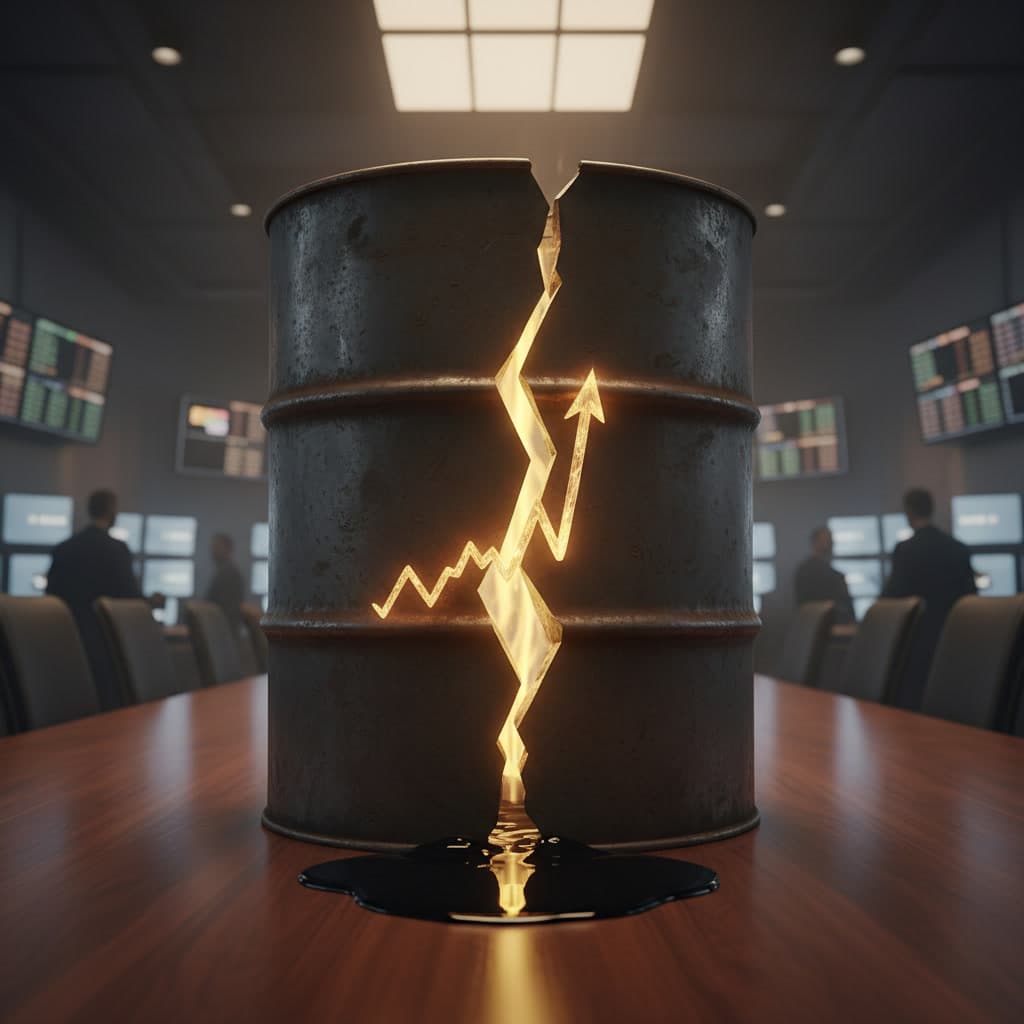
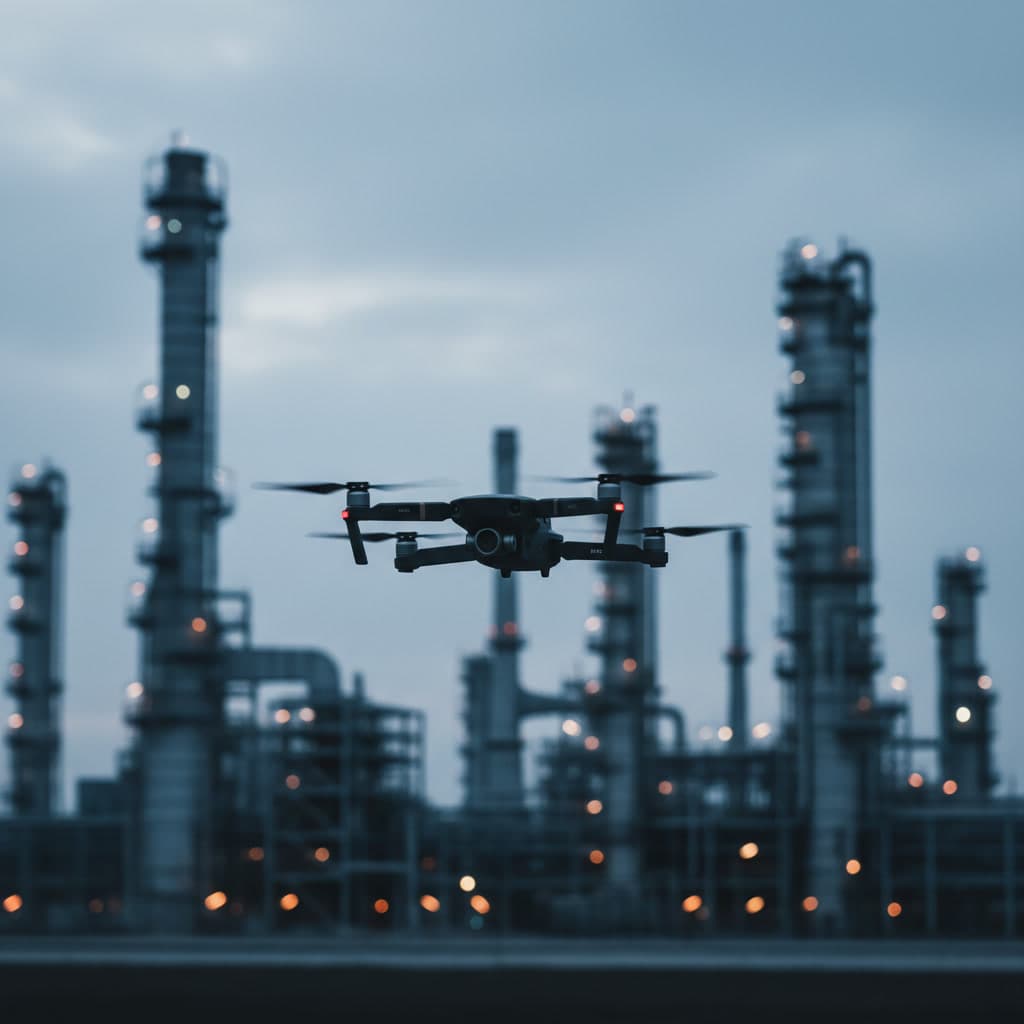
The era of the impregnable, centralized mega-refinery is functionally dead. Security in global energy markets is no longer dictated by sovereign borders or massive naval fleets; it is now strictly a function of intercept mathematics. As a policy and regulatory researcher who has spent the last 15 years evaluating critical infrastructure through a capital-destruction framework, I am tracking a fundamental shift in how state and non-state actors project power. Sub-$50,000 autonomous munitions are systematically dismantling multi-billion-dollar energy nodes, exposing vulnerabilities that legacy risk models simply cannot compute.
This reality forces institutional analysts, insurers, and policymakers to completely recalculate long-term energy risk premiums. We are witnessing the operationalization of asymmetric petro-infrastructure denial, where the cost of attacking an energy grid is orders of magnitude lower than the cost of defending it.

The Economics of High-Impact, Low-Cost Energy Sabotage
The Mathematics of Drone Strikes Versus Legacy Air Defense Systems
The core mechanism driving this shift is severe financial asymmetry. Traditional air defense networks were engineered to intercept ballistic missiles and advanced fighter jets, utilizing interceptors like the Patriot PAC-3, which costs approximately $3 million to $4 million per launch. Conversely, long-range loitering munitions, such as the Iranian-designed Shahed-136 or the Ukrainian Lyutyi, cost between $20,000 and $50,000 to manufacture.
When attackers deploy swarm tactics, they intentionally exhaust the magazine depth of expensive, localized air defense batteries. Even if legacy systems achieve a 90% intercept rate, the 10% of drones that penetrate the defensive umbrella achieve catastrophic kinetic success. The defensive calculus breaks down completely when neutralizing a $35,000 threat requires a $3 million response.
Redefining Critical Node Vulnerability in Global Supply Chains
Energy infrastructure is uniquely susceptible to this form of sabotage. Refineries and export terminals are highly pressurized, combustible environments. A relatively small 40-kilogram explosive payload delivered precisely into a Crude Distillation Unit (CDU) or a catalytic cracker initiates a cascading thermal event. The resulting damage requires highly specialized, custom-engineered replacement parts that take 6 to 12 months to fabricate and install.
The table below illustrates the extreme capital destruction ratio inherent in modern asymmetric attacks.
Weaponizing the Oil Map: Russia, Ukraine, and the Black Sea Paradigm
Strategic Decapitation of Russian Export Capabilities via Deep Strikes
The most definitive case study of this new warfare paradigm is the ongoing Ukrainian drone campaign against Russian energy infrastructure. Moving beyond sporadic border skirmishes, Ukraine executed over 120 documented strikes on Russian refineries and fuel depots throughout 2025, targeting facilities deep within Russian territory such as the Volgograd and Saratov refineries.
By leveraging long-range autonomous technology, Ukraine bypassed conventional front lines to directly degrade Russia's war economy. The International Energy Agency (IEA) reported that these strikes suppressed Russian refinery processing rates by an estimated 500,000 barrels per day, a disruption projected to persist through mid-2026 due to the complex sanctions environment restricting Russia's access to replacement components.
Cascading Downstream Effects on European and Asian Crude Flows
The localized destruction of CDUs triggered immediate, global second-order effects. Unable to process crude domestically, Russia faced severe internal gasoline shortages, pushing wholesale prices on the St. Petersburg International Mercantile Exchange to historic highs and forcing Moscow to implement strict fuel-export bans.
Simultaneously, the inability to refine products forced Russia to export greater volumes of unrefined crude to Asian markets, completely altering shipping logistics and tanker utilization rates. This demonstrates how a localized kinetic event executed by cheap tech instantly redraws global trade routes, bypassing traditional economic sanctions.
The Kharg Island Calculus and Middle Eastern Chokepoints
Evaluating the Extreme Fragility of Concentrated Export Terminals
While refineries represent critical processing nodes, export terminals act as absolute supply bottlenecks. Iran’s Kharg Island perfectly encapsulates this extreme fragility. Situated in the northern Middle East Gulf, this single, five-mile-long coral outcrop handles approximately 94% of Iran’s seaborne crude exports. Its deepwater berths are essential for loading Very Large Crude Carriers (VLCCs), and the facility holds a storage capacity of roughly 31 million barrels.
Kharg Island is a massive single point of failure. Unlike a traditional naval blockade, which requires overwhelming maritime supremacy and carrier strike groups to enforce, asymmetric denial requires only a launch site within a 1,000-kilometer radius and a handful of GPS-guided munitions. Disabling the loading arms or storage tanks at Kharg would instantly strand over 1.5 million barrels per day of global supply.
Geopolitical Fallout from Localized Infrastructure Degradation
The geopolitical environment in early 2026 highlighted this exact threat vector. As military escalations targeted infrastructure in the Persian Gulf, satellite imagery from Kpler revealed massive preemptive drawdowns of crude storage at Kharg Island. Iran attempted to pivot exports to alternative terminals like Jask, but Jask’s effective capacity remains a fraction of Kharg's. The mere threat of autonomous strikes on a concentrated node forces sovereign states into defensive, highly inefficient logistical maneuvers, proving that actual kinetic impact is not always required to disrupt markets.
Autonomous Tech and the Permanent Repricing of Energy Futures
Why Historical Risk Premiums Fail to Capture Asymmetric Threats
Institutional financial models are currently mispricing energy futures because they rely on historical volatility metrics. Legacy models assume that supply disruptions are preceded by measurable geopolitical build-ups—troop movements, diplomatic breakdowns, or prolonged embargo negotiations.
Autonomous infrastructure denial operates on a completely different timeline. A drone strike can materialize in hours, bypass early-warning radar systems, and instantly remove hundreds of thousands of barrels of refining capacity from the market. Because the physical damage requires months to repair, the resulting supply shock is structural, not temporary.
Market Adaptations and the Accelerated Shift Toward Decentralized Energy Assets
Capital markets are beginning to react to this persistent threat envelope. We are tracking a distinct reallocation of institutional capital away from massive, highly concentrated fossil fuel projects. Investors recognize that a multi-billion-dollar coastal refinery is essentially a static target awaiting a $30,000 munition. Consequently, capital is accelerating toward decentralized energy assets—microgrids, distributed solar, and modular nuclear reactors—which inherently lack the single-point-of-failure vulnerability of legacy petro-infrastructure.
Regulatory and Capital Allocation Responses for 2026 and Beyond
Insurance Market Contraction and the Necessity of State-Backed Indemnification
The immediate regulatory fallout of this paradigm is occurring within the reinsurance sector. Syndicates at Lloyd's of London and global reinsurers are rapidly rewriting force majeure and war-risk clauses to exclude damage from autonomous loitering munitions. As private insurance capacity contracts, energy operators will be forced to seek state-backed indemnification frameworks—similar to post-9/11 terrorism insurance backstops—just to maintain operational compliance and secure project financing.
Falsifiable Hypothesis: The Terminal Decline of Mega-Refinery Investments
To anchor this analysis in actionable foresight, I propose the following falsifiable claim: No new greenfield mega-refinery (exceeding 400,000 barrels per day capacity) will reach Final Investment Decision (FID) in a geopolitically contested region by 2028 unless it integrates a dedicated, directed-energy air defense system directly into its capital expenditure.
Watch for these specific indicators to confirm or refute this hypothesis over the next 24 months:
- Capex Reallocations: Major energy firms explicitly redirecting capital from centralized mega-projects toward smaller, modular refining units spread across multiple jurisdictions.
- Regulatory Mandates: National energy regulators (such as FERC in the US or ESMA in Europe) drafting mandatory localized anti-drone defense requirements for critical infrastructure baseline compliance.
- Insurance Premium Spikes: A sustained 40%+ increase in property damage insurance premiums for existing coastal energy terminals that lack integrated electronic warfare (EW) countermeasures.
The New Baseline for Energy Security
Financial models must rapidly adapt to a reality where persistent infrastructure denial is a baseline condition, not an anomaly. The mathematics of modern warfare dictate that offense is currently cheaper, faster, and more scalable than defense. Watch for a massive reallocation of capital toward localized, laser-based defense systems and a strategic, risk-adjusted pivot toward decentralized, less kinetic-prone energy alternatives.
Frequently Asked Questions
How does asymmetric petro-infrastructure denial differ from traditional energy blockades? Traditional blockades rely on massive naval or aerial supremacy to physically choke supply lines. Asymmetric denial utilizes cheap, easily deployable technology like autonomous drones to surgically disable critical nodes, achieving severe disruption without requiring conventional military dominance.
What impact does localized infrastructure targeting have on global crude pricing models? It forces institutional analysts to embed a permanent geopolitical risk premium into futures contracts. The unpredictable and highly effective nature of autonomous strikes means supply disruptions can materialize instantly, bypassing conventional early-warning indicators and rendering historical volatility models obsolete.
Sources
- International Energy Agency (IEA): Oil Market Report
- Center for Strategic and International Studies (CSIS): Calculating the Cost-Effectiveness of Russia's Drone Strikes
- Kpler: Kharg Island Terminal Storage and Export Data
- S&P Global: Iran Crude Storage Capacity and Infrastructure Deterioration
- Industrial Info Resources: Ukraine Drone Strikes Taking a Toll on Russian Refining Capacity
Loading comments...
Related
View all →