

Silicon Export Arbitrage: The Lucrative Shadow Market for Advanced AI Chips
Enterprise supply chain leaders and compliance officers face a critical binary risk in 2026: either implement hardware-level telemetry to trace advanced AI accelerators, or risk federal indictment for inadvertent export control violations. The recent Department of Justice charges against Super Micro Computer executives for smuggling Nvidia chips highlight a sophisticated shadow economy exploiting geopolitical friction. Relying on quantitative trade data, hardware lifecycle telemetry, and the Bureau of Industry and Security (BIS) framework, the following analysis dissects the mechanics of silicon export arbitrage, the economic premiums driving insider threats, and the evolving regulatory mandates that dictate global compute procurement.
The Mechanics of the AI Hardware Underground
Exploiting Regulatory Loopholes via Shell Corporations
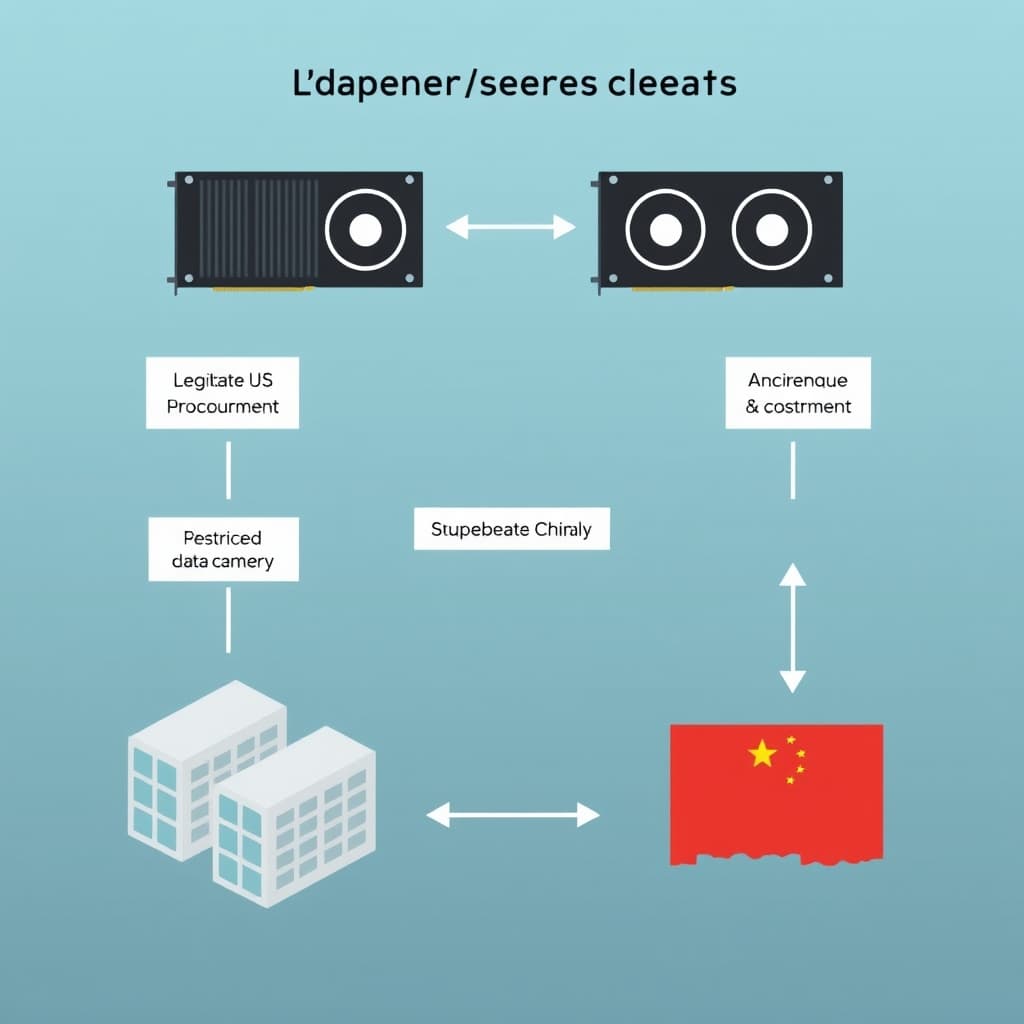
Smuggling syndicates initiate the arbitrage process by establishing corporate entities in non-sanctioned jurisdictions, such as Southeast Asia or the Middle East. These entities act as legitimate purchasers, submitting pristine end-user certificates to secure high-performance computing hardware from authorized distributors.
This creates a fragmented paper trail that standard Know Your Customer (KYC) protocols fundamentally fail to detect. The legal liability technically transfers to the intermediary, creating a veil of plausible deniability for the original manufacturer.
The unsealed March 2026 federal indictment against Super Micro Computer associates details exactly this methodology. The defendants utilized a pass-through company in Southeast Asia to generate forged documentation, effectively masking the true Chinese destination from internal compliance audits.
The Logistics of Transporting Restricted GPUs Across Borders
Once the hardware reaches the intermediary jurisdiction, physical transshipment protocols take over. Logistics operators strip serial numbers, alter manifests, and repackage the silicon into generic server chassis to bypass secondary customs inspections.
Hardware tracking becomes completely disjointed from physical reality, rendering paper-based compliance obsolete. Supply chains lose visibility the moment a pallet clears the first port of entry, preventing regulators from verifying the final deployment environment.
In the Super Micro operation, smugglers staged bogus equipment—swapping high-end AI servers for legacy components—to deceive independent inspection teams while the restricted Nvidia chips were quietly routed to restricted data centers.
Corporate Culpability in the Super Micro Smuggling Ring
Internal Compliance Failures vs. Willful Blindness
Corporate sales structures inherently weigh revenue generation against the friction of rigorous end-use verification. When compensation is tied to aggressive growth targets, internal compliance teams are frequently sidelined or starved of the resources needed to conduct physical audits.
Executives can maintain a posture of willful blindness, ignoring red flags in procurement volume from obscure regional distributors. The threshold for legal culpability shifts from active conspiracy to gross negligence, exposing the entire corporate board to federal scrutiny.
Prosecutors allege that Super Micro executives actively pressured internal compliance teams to approve questionable shipments, utilizing fake servers to satisfy basic audit requirements and
Loading comments...
Related
View all →