Sovereign Energy Triage: Pricing Geopolitical Fractures in Global Markets
On March 24, 2026, Philippine President Ferdinand Marcos Jr. invoked Executive Order 110, declaring a state of national energy emergency as domestic fuel supplies plummeted toward a critical 45-day threshold. This aggressive policy maneuver bypassed standard environmental regulations, permitting the immediate use of highly polluting Euro-2 fuels to keep baseline infrastructure operational. The sudden pivot from long-term energy transition to raw survival economics is reshaping global markets. Readers will discover the mechanics of sovereign energy triage, how import-dependent states are aggressively pricing in supply disruptions, and the resulting financial shifts across the macroeconomic landscape.
The Mechanics of State-Level Energy Triage
Analyzing the structural integrity of global energy markets requires a rigid framework that separates temporary price shocks from permanent logistical scarring. Sovereign energy triage occurs when a nation-state systematically abandons open-market procurement in favor of draconian domestic rationing and direct bilateral supply interventions.
Redefining National Security Through Commodity Reserves
Strategic Petroleum Reserves (SPRs) were engineered as temporary buffers, not perpetual supply lines. In mid-March 2026, the International Energy Agency (IEA) authorized a historic 400-million-barrel emergency release to counter the paralysis of Middle Eastern shipping lanes. The United States alone committed 172 million barrels, a drawdown mathematically projected to leave its national stockpile at roughly 242 million barrels—the lowest operational level since the early 1980s.
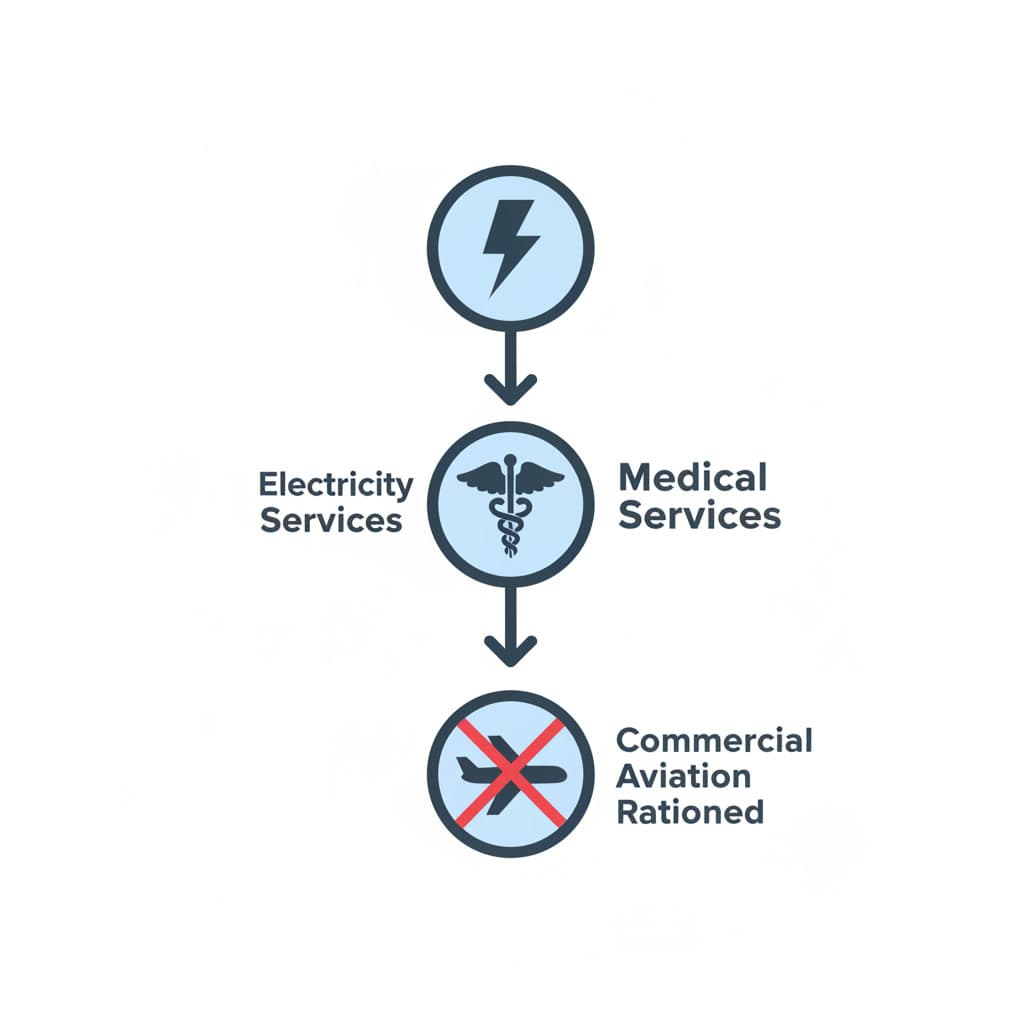
The sheer volume of this intervention creates a mathematical mirage. Prior to the current conflict, the Strait of Hormuz facilitated the transit of approximately 20 million barrels of crude and refined products daily. A 400-million-barrel global release covers exactly 20 days of total supply failure. Once this buffer evaporates, states are forced to execute triage protocols, prioritizing critical infrastructure over commercial enterprise. The depletion of these reserves fundamentally alters national security postures, transforming geological assets into immediate geopolitical ammunition.
The Fiscal Toll of Emergency Procurement Mechanisms
When physical supply chains fracture, the financial architecture built atop them violently reprices risk. Sovereign entities lacking domestic production must secure forward contracts at extortionate war-risk premiums. The Cboe Crude Oil ETF Volatility Index (OVX), a definitive gauge of market anxiety, recently surged past the 90-point threshold, signaling extreme distress in 30-day forward pricing.
Governments are now forced to subsidize these astronomical premiums to prevent domestic economic collapse. This dynamic drains national treasuries at an unprecedented velocity. Emergency procurement funds, originally earmarked for sovereign wealth generation or infrastructure development, are being liquidated to purchase diesel and aviation fuel at spot prices completely detached from historical fundamentals.
The Philippine Blueprint for Fuel Conservation
Island economies serve as the canary in the coal mine for global supply chain contagion. Without pipeline networks or overland transport alternatives, these nations face existential threats the moment maritime corridors constrict.
Activating Emergency Executive Mandates for Resource Allocation
The Philippine Department of Energy's calculation of a 45-day fuel reserve triggered an immediate, unified executive response. Under Executive Order 110, the state assumed direct control over energy allocation. The mandate enforces strict conservation measures, effectively triaging the economy. Traditional buses, power plants, and maritime shipping sectors have been legally authorized to burn lower-grade Euro-2 petroleum, a desperate measure to stretch existing, higher-grade Euro-4 inventories.
This blueprint reveals the stark reality of modern rationing. Governments will instantly sacrifice decade-long environmental commitments to maintain grid stability. The institutionalization of these mandates provides a grim template for other import-dependent nations facing identical mathematical certainties regarding their dwindling reserves.
Capital Controls and Industrial Load Shedding Impacts
The secondary effects of this blueprint are profoundly disruptive. To guarantee dollar liquidity strictly for essential energy imports, central banks in vulnerable jurisdictions must intervene heavily in foreign exchange markets. Capital controls often follow, restricting the outflow of hard currency for non-essential goods.
Simultaneously, industrial load shedding becomes mandatory. Power grids shift away from natural gas—currently constrained by liquefied natural gas (LNG) carrier shortages—back to highly reliable, albeit polluting, coal and diesel generators.
Geopolitical Fractures and Supply Chain Contagion
The localized rationing in Southeast Asia is directly tethered to the kinetic warfare fracturing the Middle East. Global maritime networks are experiencing their most severe realignment since the closure of the Suez Canal in the late 1960s.
Middle East Chokepoints and Surging Tanker Rerouting Costs
With actual transit through the Strait of Hormuz operating at less than 10% of pre-war levels, the arteries of global trade have been severed. Shipping conglomerates are executing massive detours around the Cape of Good Hope. This rerouting adds up to 11,000 nautical miles and 10 to 14 days to standard Asia-Europe transit times.
The financial friction generated by these detours is staggering. The price of marine fuel (0.5% sulfur) delivered in critical hubs like Singapore escalated by 118% in a matter of weeks. By artificially reducing the available supply of shipping vessels—since ships are trapped at sea for longer durations—freight rates have skyrocketed.
Cascading Failures in Cross-Border Energy Infrastructure
The contagion extends far beyond crude oil. Chemical tanker markets are facing structural inefficiencies, with transatlantic styrene freight costs soaring from $80 to $300 per tonne. Insurance underwriters have aggressively repriced hull and machinery coverage, transforming war-risk premiums from a marginal expense into a dominant operating cost.
Macro-Financial Repricing of Sovereign Risk
The permanent scarring of energy logistics is forcing bond markets to radically reassess sovereign debt. Energy security is no longer a peripheral geopolitical concern; it is the core determinant of a nation's fiscal solvency.
Bond Yield Volatility in Import-Dependent Economies
Sovereign bond yields in highly import-dependent economies are experiencing violent volatility. Fixed-income investors are demanding massive risk premiums to hold the debt of nations that must burn through foreign exchange reserves simply to keep the lights on. When a country like the Philippines is forced into state-to-state negotiations for Russian oil just to survive, credit rating agencies take immediate notice. The cost of borrowing surges precisely when these governments desperately need cheap capital to fund emergency subsidies.
Corporate Hedging Strategies for Heavy Industry
At the enterprise level, heavy industry is abandoning traditional financial hedges in favor of physical asset control. Options contracts on the USO ETF (the underlying asset for the OVX) provide temporary paper protection, but they cannot power a smelting plant if physical diesel is unavailable. Corporations are aggressively hoarding raw materials, building localized storage facilities, and executing preemptive forward contracts regardless of spot price fluctuations. This corporate panic buying exacerbates the very shortages governments are attempting to manage.
Structural Market Adjustments for the 2026-2030 Horizon
The crises of 2026 will dictate the architecture of the global energy grid for the remainder of the decade. Policymakers and enterprise leaders must accept that the era of frictionless, just-in-time energy delivery is permanently closed.
Accelerated Enterprise Pivot to Localized Microgrids
To insulate themselves from sovereign energy triage, massive industrial complexes will rapidly decentralize their power generation. The deployment of localized microgrids—combining industrial-scale solar, advanced battery storage, and dual-fuel backup generators—will transition from an ESG initiative to a critical operational survival mandate. Facilities that rely entirely on the national grid will be viewed as uninvestable liabilities by private equity and institutional capital.
The Institutionalization of Perpetual Rationing Frameworks
Emergency measures enacted today will harden into permanent bureaucratic structures. Governments will maintain the legal authority to dictate energy allocation long after the current geopolitical fires burn out. Carbon taxes and emissions targets will be quietly subordinated to raw energy security metrics.
Falsifiable Thesis: By Q4 2026, at least three G20 nations will formally decouple their strategic petroleum reserve releases from open-market pricing, instead utilizing direct state-to-state physical swaps.
Confirming Indicators:
- Central bank foreign exchange swap lines being explicitly earmarked for bilateral energy procurement.
- The CBOE Crude Oil Volatility Index (OVX) maintaining a baseline above 75 for 90 consecutive days.
- A measurable, sustained decline in spot market liquidity as sovereign crude contracts entirely bypass public exchanges.
Conclusion
The permanent scarring of global energy logistics requires immediate recalibration of both state and corporate risk models. Investors and policymakers must closely track foreign exchange interventions as state actors increasingly prioritize energy survival over standard economic growth targets. The mechanics of sovereign energy triage dictate that those who control the physical molecules dictate the terms of the future macroeconomy.
FAQ
How does sovereign energy triage alter global commodity pricing? It introduces a persistent geopolitical risk premium,
Loading comments...
Related
View all →