

Synthetic Persona Merchandising: The Shadow Economy of AI Influencers
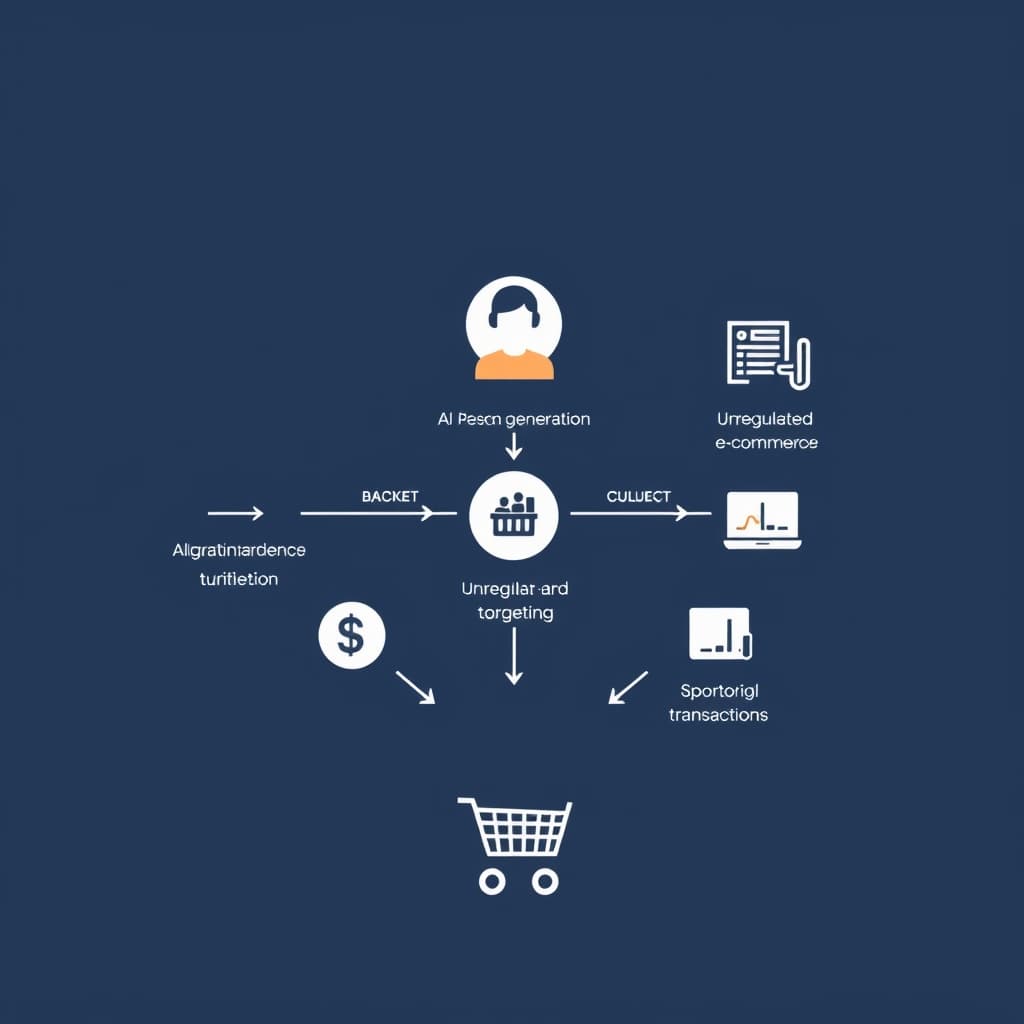
A scene-specific AI avatar placed in a simulated clinical setting drives up to 300% higher conversion rates for supplement ads compared to standard human-led user-generated content. This constraint on human attention matters because it quantifies a dangerous psychological exploit: synthetic authority. By analyzing the intersection of generative identity protocols, e-commerce platform algorithms, and the Federal Trade Commission’s recent Trade Regulation Rule on the Use of Consumer Reviews and Testimonials, we can evaluate the pipeline from avatar generation to unregulated transaction. Applying a risk-arbitrage framework to this ecosystem reveals a critical market failure where the speed of synthetic content creation vastly outpaces the mechanisms of consumer protection.
Architecting Trust Through Algorithmic Proxies
The Psychology of Synthetic Parasocial Relationships
The boundary between human endorsement and algorithmic deception has collapsed. Generative video platforms no longer produce stiff, uncanny figures; they deploy "lifestyle avatars" situated in context-specific environments. A digital persona wearing scrubs in a brightly lit clinic inherently commands more trust than a disembodied voice. These avatars mimic human micro-expressions, breathing patterns, and conversational pacing, exploiting the psychological heuristics humans use to gauge authenticity. Consumers form parasocial relationships with these entities, lowering their natural skepticism toward the products being pitched.
Bypassing Ad Filters with Hyper-Personalized Deepfakes
Traditional advertising platforms rely on automated moderation filters that scan for known bad actors, specific promotional keywords, or hashed video files. Synthetic personas bypass these constraints through sheer volume and variance. A single script can be algorithmically spun into thousands of unique video permutations—altering the avatar's ethnicity, the background lighting, the pacing of the speech, and the exact phrasing of the pitch. Because each video is technically a net-new file, hash-matching systems fail. The ad networks are forced into a reactive posture, playing an unwinnable game of whack-a-mole against hyper-personalized deepfakes that dynamically adapt to bypass moderation triggers.
The Shadow Economy of Unregulated Supplements
Health Claims Without Human Accountability
The most lucrative application for synthetic merchandising lies in unregulated health and wellness products. Deepfake doctors and synthetic influencers are routinely deployed to pitch cortisol gummies, batana oil, and moringa capsules. These avatars make explicit medical claims—promising rapid weight loss or immediate stress relief—that a human creator would hesitate to vocalize due to liability concerns. When an AI avatar promises a cure, the psychological impact on the consumer remains identical to a human endorsement, but the traditional chain of accountability is severed.
Supply Chain Obfuscation in the Generative Era
The generative era has introduced a profound second-order effect: the complete decoupling of the marketing entity from the physical supply chain. The operator generating the avatar is rarely the entity manufacturing the supplement. A digital marketer in one jurisdiction can use a software-as-a-service platform to generate the video, route the traffic through a decentralized affiliate network, and fulfill the order via a white-label dropshipper in another country. If a product causes adverse health effects, regulators face an obfuscated web of shell companies and API calls, making it nearly impossible to identify the ultimate beneficiary of the transaction.
Deconstructing a Viral AI Health Pitch
Tracing the Origin of a Synthetic Endorsement
Consider the recent proliferation of accounts operating under monikers like "Holistic Health Finds." In these campaigns, a synthetic persona alternately claimed to be a medical professional, a former model, and the spouse of a high-profile surgeon. The avatar delivered fabricated personal testimonies regarding the efficacy of unregulated hair growth oils. The operators leveraged platforms offering commercial-use digital avatars—similar to the infrastructure provided by TikTok's Symphony Digital Avatars—to mass-produce these pitches. When users clicked the bio link, they were routed to a highly optimized checkout page. The human operators remained entirely insulated from the fraudulent medical claims being broadcasted to millions.
Revenue Extraction Models of Deepfake E-Commerce
Understanding the financial incentives requires breaking down the exact mechanisms of revenue extraction.
Regulatory Arbitrage in Digital Consumerism
Jurisdictional Loopholes for Non-Human Entities
Regulatory bodies operate within strict geographic boundaries, while synthetic merchandising networks are inherently borderless. The European Union's AI Act mandates transparency requirements for limited-risk systems like chatbots and synthetic media. However, a server located in a non-compliant jurisdiction can seamlessly pump unregulated content into the feeds of US or EU consumers. This creates a massive opportunity for regulatory arbitrage, where operators domicile their digital infrastructure in regions with lax enforcement while extracting capital from highly regulated consumer markets.
The FTC's Uphill Battle Against Generative Identities
The Federal Trade Commission finalized a rule in August 2024 that explicitly prohibits fake and AI-generated consumer reviews, as well as deceptive celebrity testimonials. The agency has also finalized rules targeting the impersonation of businesses and government entities, with proposed expansions to cover individual impersonation. The core constraint is attribution. Proving that an AI-generated video violates the FTC Act is straightforward; proving who generated the video and where the funds settled requires cross-border subpoenas, forensic accounting, and cooperation from highly guarded ad networks.
Next-Generation Merchandising Frontiers
Real-Time Interactive AI Sales Agents
Looking toward 2026, the static AI video is merely a transitional technology. The next frontier involves real-time, conversational avatars integrated directly into digital storefronts. These interactive sales agents will host live streams 24/7, reading user comments, dynamically adjusting their sales pitches based on the viewer's demographic data, and executing transactions without human intervention. This shift from asynchronous video to synchronous, emotionally responsive sales agents will further blur the line between human connection and algorithmic extraction.
Emerging Technical Countermeasures for Consumer Protection
As the volume of synthetic merchandising scales, the infrastructure required to police it must evolve.
A unified cryptographic provenance standard enforced at the device level could alter this trajectory. If major ad networks successfully implement real-time hardware-backed provenance checks that block synthetic media at the point of upload without suffocating legitimate creator tools, my assessment of the regulatory timeline would shift. Until then, the economic incentives heavily favor the proliferators of synthetic merchandising.
The commercialization of deepfakes represents a paradigm shift in digital retail that prioritizes engagement over authenticity. Watch for imminent crackdowns from global trade commissions and the rise of decentralized identity verification protocols as the market attempts to correct this imbalance.
FAQ
Who holds legal liability when an AI-generated persona promotes a dangerous product? Currently, liability typically falls on the corporate entity or individual operating the avatar, though shell companies often shield them. Regulators are actively drafting frameworks to pierce this digital veil.
How do synthetic influencers bypass standard advertising platform guidelines? They leverage sophisticated generative models to mimic organic user-generated content, evading automated moderation tools that primarily scan for traditional promotional keywords and known human bad actors.
Sources
- FTC Announces Final Rule Banning Fake Reviews and Testimonials
- FTC Finalizes Rule on Impersonation of Government and Businesses
- European Union Artificial Intelligence Act
- Therapeutic Goods Administration (TGA) Advertising Guidelines
- Coalition for Content Provenance and Authenticity (C2PA) Technical Specifications
Loading comments...
Related
View all →


Asymmetric Chokepoint Contagion: How the Hormuz Blockade is Rewiring Tech Equities