


Asymmetric Chokepoint Contagion: How the Hormuz Blockade is Rewiring Tech Equities
Conventional market theory suggests that maritime energy shocks primarily penalize industrial and transportation sectors while leaving high-margin digital economies relatively unscathed. The ongoing effective closure of the Strait of Hormuz to non-aligned shipping proves this paradigm is fundamentally obsolete. By leveraging a cross-asset volatility framework, my analysis models how a localized physical chokepoint—halting approximately 20% of global petroleum liquids consumption—forces an immediate, systemic repricing of digital assets. The resulting 1,000-point plunge in Dow futures and the aggressive sell-off in growth equities are not sentiment-driven panics; they are the mathematical output of asymmetric chokepoint contagion. When Brent crude approaches $120 a barrel, the transmission mechanism bypasses traditional energy consumers and directly strikes the operational expenditures of cloud infrastructure and the discount rates of high-multiple technology equities.
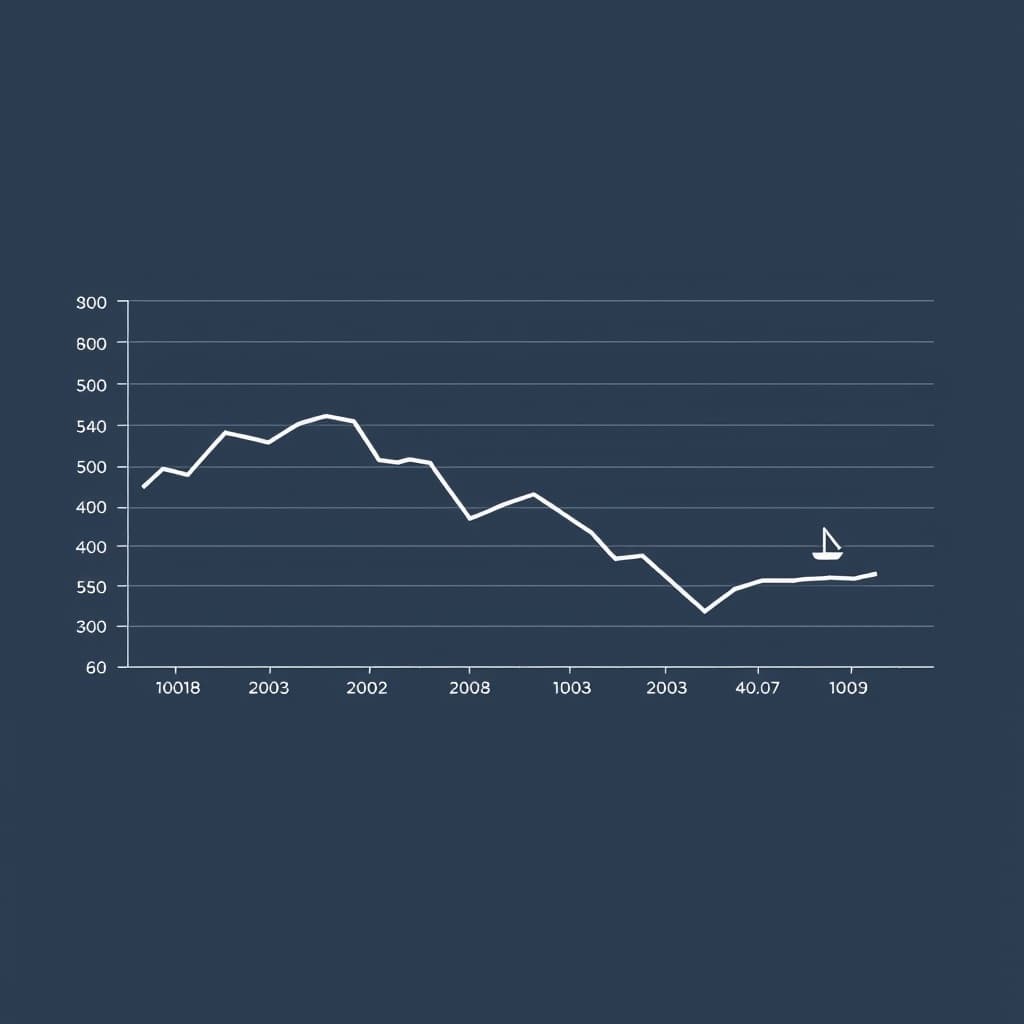
The Anatomy of an Asymmetric Chokepoint
Physical Bottlenecks Meeting Digital Dependency
The Strait of Hormuz is functionally irreplaceable. While Saudi Arabia and the UAE possess limited pipeline bypass capacity (roughly 3.5 to 5.5 million barrels per day), the vast majority of the 20 million barrels per day that transit the strait have no alternative route. The contagion becomes asymmetric because the global digital economy is entirely reliant on physical energy infrastructure. Cloud computing, artificial intelligence training, and globalized semiconductor logistics require massive, uninterrupted baseload power and affordable freight. When a maritime blockade restricts physical energy flows, the shockwave instantly hits digital dependency nodes, erasing the boundary between the physical and digital economies.
Why the Hormuz Closure Transcends Past Maritime Embargoes
Historically, oil embargoes or maritime disruptions allowed markets time to reallocate capital and reroute supply chains. The 2026 Hormuz blockade is structurally different due to the velocity of modern capital and the hyper-concentration of AI infrastructure. Today's hyperscalers operate at a scale where energy is no longer a marginal cost. Consequently, the closure does not merely cause localized fuel shortages; it triggers an immediate upward repricing of global inflation expectations, forcing central banks to halt rate-cut cycles. This creates a dual-front crisis for tech equities: soaring operational costs combined with contracting valuation multiples.
Translating $120 Oil into Severe Tech Capital Flight
Margin Compression in Cloud Infrastructure and Data Centers
Electricity and power costs represent the largest ongoing expense for data centers, typically accounting for 40% to 60% of total operational budgets. The proliferation of artificial intelligence workloads has exacerbated this vulnerability, as AI-optimized server racks require significantly more power than traditional infrastructure.
Consider the localized impact on a major data center hub like Loudoun County, Virginia. Hyperscalers operating in these dense zones rely on predictable industrial electricity rates. As Brent crude spikes, the cost of marginal power generation—often tied to natural gas and coal, which rise in sympathy with oil—surges. Operators are forced to absorb these costs, as long-term enterprise cloud contracts prevent immediate price hikes. For quantitative models pricing cloud providers, a 30% increase in energy input costs directly shaves hundreds of basis points off operating margins, triggering algorithmic sell-offs.
The Sudden Liquidity Drain from High-Multiple Growth Equities
Technology valuations are highly sensitive to the discount rates applied to future earnings. When energy prices gap higher, the Federal Reserve and other central banks are forced to pivot from accommodating growth to defending price stability. The immediate repricing of the yield curve drains liquidity from the market. High-multiple growth equities, which rely on low interest rates to justify their valuations, experience severe capital flight. Institutional capital rotates violently out of the NASDAQ-100 and into defensive sectors, energy producers, and hard assets. This liquidity drain is mechanical, driven by risk-parity funds and volatility-targeting strategies that automatically de-risk when cross-asset correlations break down.
Systemic Contagion Across Hardware Supply Chains
Semiconductor Freight Rerouting and Lead Time Expansion
The semiconductor supply chain is notoriously fragile, relying on a complex web of fabrication, assembly, testing, and packaging facilities spread across Asia, Europe, and North America. Moving these high-value components requires a delicate balance of ocean and air freight. The Hormuz blockade has sent bunker fuel prices skyrocketing, forcing ocean carriers to reroute vessels and extend transit times.
While air freight is the standard alternative for advanced nodes and time-sensitive components, aviation fuel prices are directly pegged to crude oil. A spike to $120 per barrel drastically increases the cost of air cargo. Logistics providers are reporting significant rate uplifts, narrowing the margin buffers on expedited shipments.
Secondary Cost Inflation on Global Manufacturing Hubs
Beyond direct freight costs, the energy shock creates secondary inflation across manufacturing hubs. Outsourced Semiconductor Assembly and Test (OSAT) facilities in regions like Taiwan, South Korea, and Malaysia are highly energy-intensive. Sustained increases in crude and refined product shipping costs feed directly into the electricity pricing of these nations, which are heavy net importers of energy. This secondary inflation forces foundries and assembly houses to pass costs down the line, eventually hitting the hardware margins of consumer electronics and enterprise hardware companies.
Restructuring Tech Portfolios for Sustained Blockades
Pivoting Toward Energy-Independent AI Architectures
Institutional investors must transition from reactive selling to structural portfolio realignment. The current environment favors technology firms developing energy-efficient silicon and localized, renewable-powered data centers. Companies that have vertically integrated their power purchasing agreements (PPAs) with nuclear or dedicated hydro-electric sources hold a distinct operational advantage over those exposed to spot grid pricing.
Defensive Equity Positioning in a High-Friction Trade Era
Navigating asymmetric chokepoint contagion requires ruthless prioritization of cash flow and balance sheet resilience.
A rapid de-escalation resulting in the immediate reopening of the Strait of Hormuz to non-aligned shipping would invalidate the core premise of sustained margin compression. If sovereign actors secure the corridor and release strategic petroleum reserves at a volume sufficient to force Brent crude back below $80, the algorithmic models would quickly reverse. In that scenario, the discount rate pressure would alleviate, prompting a swift rotation back into high-beta technology equities.
The 1,000-point plunge in Dow futures is not an anomaly; it is the accurate pricing of asymmetric chokepoint contagion. The effective closure of the Strait of Hormuz demonstrates that digital economies are entirely tethered to physical energy realities. Until maritime security is restored or supply chains fully decouple from Middle Eastern energy density, the structural headwinds facing technology equities will persist. Monitoring sovereign intervention in maritime corridors and tracking semiconductor inventory cycles will be critical for determining when the current capital flight exhausts its momentum.
FAQ
What exactly defines asymmetric chokepoint contagion in financial markets? It occurs when a localized physical disruption, such as a single maritime strait closing, triggers disproportionate, cascading failures across seemingly unrelated global sectors like software and cloud computing due to rapid liquidity contraction and supply chain panic.
Why do tech equities suffer so dramatically during sudden energy shocks? Tech valuations are highly sensitive to discount rates and market liquidity. A severe oil shock instantly elevates inflation expectations and operating costs, forcing capital out of high-multiple growth stocks and into defensive or hard assets.
Sources
- U.S. Energy Information Administration (EIA) - Strait of Hormuz Transit Data
- International Energy Agency (IEA) - Global Energy Markets Assessment
- Board of Governors of the Federal Reserve System - Oil Price Shocks and Inflation
- European Central Bank (ECB) - Shipping Costs and Supply Bottlenecks
- Morningstar - Market Volatility and Energy Shocks
Loading comments...
Related
View all →

Tech
The Claude Protocol Breach: Why Shadow GenAI is the Pentagon’s Newest Insider Threat
March 02, 2026
...

Tech
Ethical Defense Decoupling: The Structural Split Between Commercial and Military AI
February 27, 2026
...