
Deep Analysis
Bittensor (TAO) Institutional Analysis: Subnet Economics and the $400 Breakout Target
April 08, 2026
...


Traders evaluating the Solana speculative landscape currently face a binary risk at the $0.05 valuation mark: does this consolidation represent a liquidity floor suitable for institutional accumulation, or the final exhaustion of post-viral momentum before a slide into illiquidity? Peanut the Squirrel (PNUT) has transitioned from its explosive 2024 origin into a mature asset class within the meme sector, currently ranking #453 by market capitalization.
This analysis dissects the structural integrity of the $0.05 support level, utilizing on-chain volume profiles and liquidity depth metrics to determine if the asset is undervalued relative to its 2026 utility and community retention. We examine the divergence between price action and holder distribution to separate algorithmic noise from genuine demand.
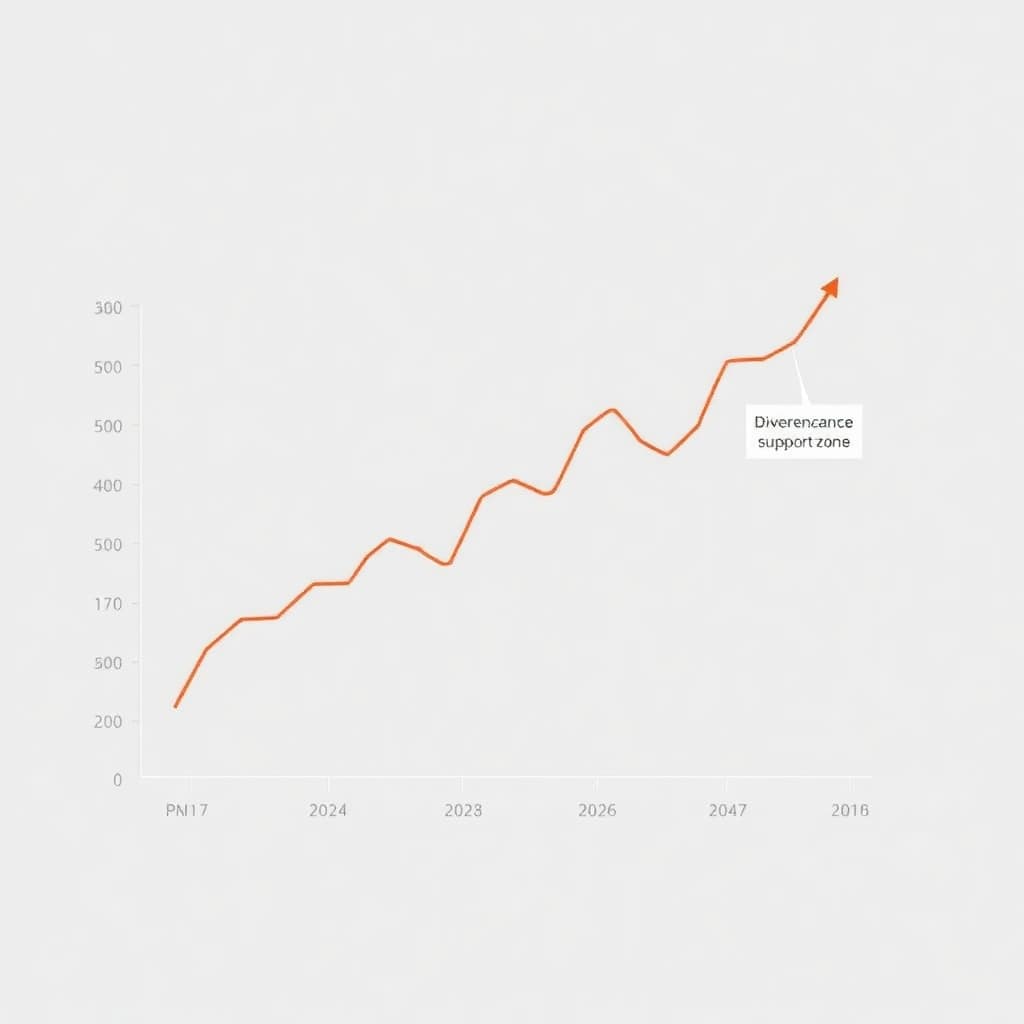
The resilience of PNUT at the $0.05 level is less a function of retail sentiment and more a result of matured Automated Market Maker (AMM) structures. Unlike the erratic volatility seen during its initial viral phase, the current order book structure on decentralized exchanges like Raydium indicates a hardening of buy-side liquidity.
Market data from February 14, 2026, shows a concentrated cluster of limit orders in the $0.047 to $0.051 range. This "buy wall" acts as a dampener for volatility. Institutional-grade analysis of the depth chart reveals that it would require significantly higher sell pressure to break the $0.047 floor today than it would have required to break similar levels in 2025. This suggests that the capital currently deployed in PNUT is "sticky"—held by long-term proponents or liquidity providers (LPs) rather than high-frequency rotators.
As Solana's DeFi ecosystem has evolved, liquidity provision has become more efficient. For PNUT, the dominance of concentrated liquidity pools (CLMMs) means that LPs have tightened their ranges around the $0.05 mark. While this reduces slippage for traders entering positions under $50,000, it also creates a suppression effect. Every minor rally is met with immediate AMM rebalancing, selling into strength to maintain pool ratios. Consequently, breaking out of this range requires an external volume catalyst capable of overwhelming the passive liquidity algorithms.
Price stability is deceptive if it masks a hollow holder base. The health of a speculative asset in its second year depends on the transition from "sniper" wallets to "community" wallets.
On-chain analysis of the top 100 non-exchange wallets reveals a distinct shift in behavior. Throughout late 2025, the trend was net-distribution (selling). However, Q1 2026 data indicates a plateau in whale selling. The "Smart Money" overlap—wallets that successfully traded other high-beta Solana assets—shows a pause in liquidation. This cessation of selling pressure from major holders is a primary contributor to the low-volatility regime we are observing. It signals that the remaining whales are effectively "locked in" or waiting for a macro-cycle shift, rather than actively exiting.
A concern for the bull case is the decoupling of PNUT's velocity from Solana's broader network activity. While Solana's Daily Active Addresses (DAA) have continued to climb in 2026, PNUT's on-chain velocity (the frequency at which tokens change hands) has slowed. A healthy speculative asset typically exhibits a correlation coefficient of >0.7 with its parent chain's activity. PNUT is currently tracking near 0.4. This indicates that while Solana grows, PNUT is becoming siloed; it is retaining value but not capturing new capital entering the ecosystem at the same rate as newer 2026 vintage assets.
Valuation in the meme asset class is a derivative of attention. With a market rank of #453, PNUT occupies a "middle class" tier—too large to be a moonshot, but too small to be considered a blue-chip infrastructure play.
The current valuation implies a requirement for sustained social volume. However, data from social listening platforms shows a decline in organic mentions compared to the 2024 peak. The ratio of Price to Social Volume is currently elevated. Historically, this divergence resolves in one of two ways: either social engagement sees a resurgence driven by new narratives (e.g., charitable initiatives or brand partnerships referencing the original P'Nut story), or the price corrects downward to match the lower attention economy.
An interesting anomaly exists where transactional volume (on-chain swaps) is outperforming social volume. Usually, hype precedes price. Here, the asset is being traded more frequently than it is being discussed. This "silent accumulation" is often a characteristic of algorithmic trading bots executing mean-reversion strategies within the $0.047-$0.051 channel, rather than genuine retail interest. For the long-term holder, this is a double-edged sword: it provides price support but lacks the viral coefficient needed for exponential growth.
Investors must contextualize PNUT within the broader risks of the 2026 Solana environment. The landscape has shifted from a "wild west" to a more crowded, competitive market.
Despite upgrades, Solana's network congestion during high-traffic periods remains a friction point. For assets like PNUT, where arbitrage keeps the price tethered to the $0.05 anchor, network congestion can widen spreads. If gas fees spike, the efficiency of the arbitrage bots defending the $0.047 support diminishes. This introduces a "fragility risk" where a network-wide stress event could temporarily remove the liquidity floor, allowing for a sharp, albeit likely brief, capitulation wick.
The opportunity cost of holding 2024-era assets is the primary systemic risk. Newer tokens launch with updated tokenomics, fresh narratives, and cleaner distribution charts (no baggage from early snipers).
Decision Framework: Holding PNUT vs. Sector RotationThe technical setup for PNUT at $0.05 is defined by compression. The asset has established a verifiable floor at $0.047, defended by both algorithmic liquidity provision and a cessation of whale selling. However, the lack of correlation with Solana's broader growth metrics suggests that PNUT has entered a "utility trap"—stable enough to survive, but lacking the fresh capital inflows required for significant expansion.
For the objective strategist, the $0.05 level represents a zone of accumulation only if one believes in a cyclical rotation back to "legacy" Solana culture. Absent a renewed marketing catalyst or a sector-wide liquidity super-cycle, the asset is likely to continue performing as a low-beta range trade rather than a high-growth breakout candidate. The data supports a strategy of range scalping between $0.047 and $0.055 rather than aggressive long-term holding.
2qEHjDLDLbuBgRYvsxhc5D6uDWAivNFZGan56P1tpump. Traders should always verify the address on a block explorer to avoid interaction with "honeypot" clones.Is PNUT liquidity locked or burned? Liquidity status varies by specific liquidity pool (e.g., Raydium vs. Orca). While the initial launch liquidity was largely burned, secondary pools created by community members or institutions may not be locked. Institutional traders must verify specific Liquidity Provider (LP) burn metrics on Raydium or Meteora to assess rug pull risks before entering large positions.
Loading comments...