
Deep Analysis
Solana (SOL) Institutional Deep Dive: Evaluating the $78 Breakdown Amid Macro Tensions and Network Upgrades
April 07, 2026
...

Institutional allocators face a critical risk vector in Q2 2026: determining whether the premium attached to decentralized artificial intelligence protocols reflects sustainable network economics or merely narrative-driven exuberance. As Bittensor (TAO) breaches the $335 threshold—representing an 8% intraday surge—capital deployers must decide whether to accumulate ahead of a projected $400 breakout or hedge against macroeconomic volatility. Drawing on 15 years of quantitative analysis and regulatory policy research, I evaluate this asset through a dual framework: the structural mechanics of the Dynamic TAO (dTAO) subnet upgrade and the derivative funding rate shifts catalyzed by institutional portfolio rebalancing.
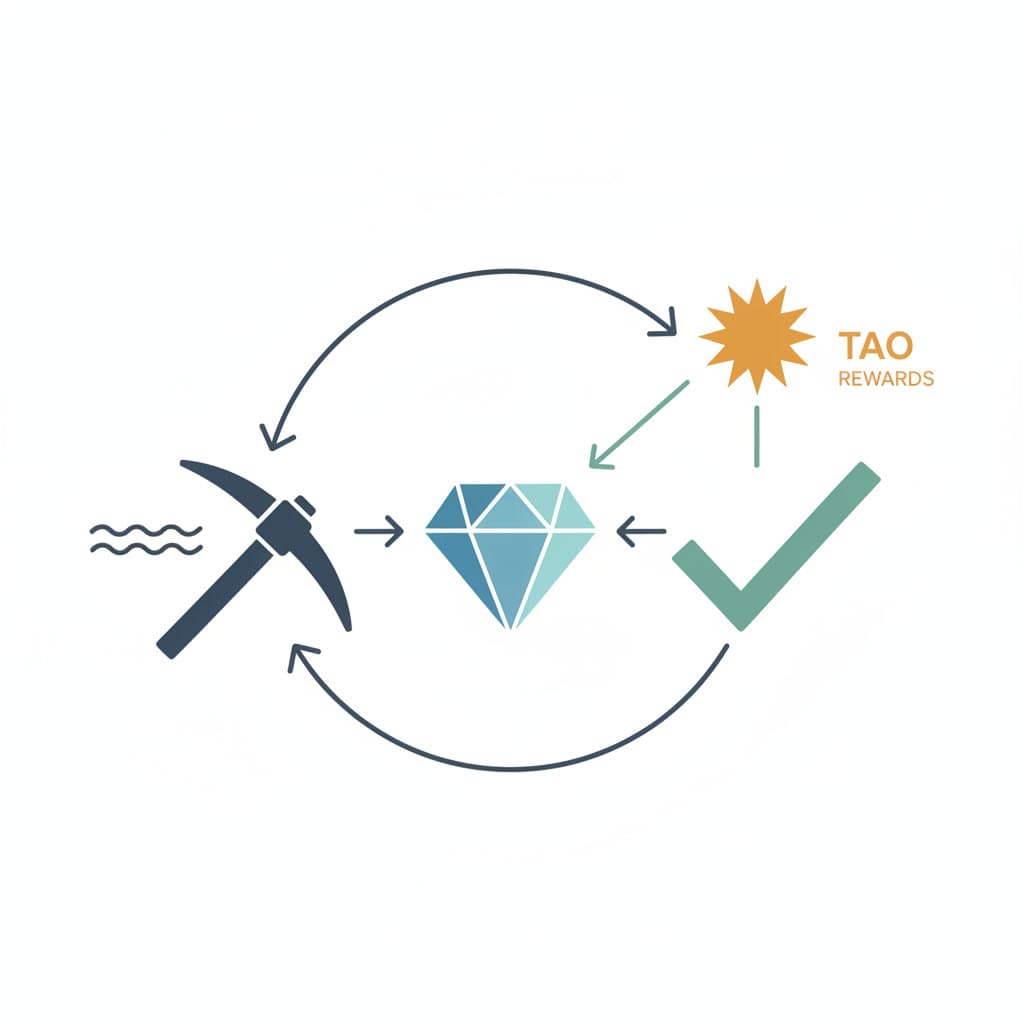
The Dynamic TAO (dTAO) architecture fundamentally rewrites the capitalization model for open-source artificial intelligence. Prior to this upgrade, the Opentensor Foundation's network relied on a monolithic emission schedule where all subnets competed for a single pool of block rewards. The dTAO implementation introduces subnet-specific tokens, transforming the ecosystem into a decentralized exchange of machine learning micro-economies. Market participants can now price individual subnets based on their distinct utility, whether that involves generative text, protein folding, or financial forecasting. TAO serves as the ultimate reserve asset and routing layer, capturing value from the aggregate compute demand across all sub-networks. This mechanism forces inefficient subnets into obsolescence while aggressively directing capital toward high-performing models.
At the core of Bittensor's Yuma Consensus mechanism lies a ruthless meritocracy. Miners deploy proprietary machine learning models to solve specific intelligence tasks, expending significant computational resources. Validators, holding delegated TAO stakes, evaluate these outputs against strict performance benchmarks. The resulting scores dictate the distribution of freshly minted TAO. This dual-sided marketplace creates a compelling second-order effect: miners are economically incentivized to continuously upgrade their hardware and algorithms, while validators must maintain rigorous evaluation standards to attract delegators. The constraint here is the sheer capital expenditure required to compete; hardware bottlenecks naturally centralize mining power among institutional-grade operators, raising barriers to entry but ensuring enterprise-level reliability for the network.
Institutional capital abhors a vacuum of utility. Grayscale’s recent decision to aggressively increase its TAO exposure from 31% to 43% within its Decentralized AI Fund signals a profound shift in risk-adjusted allocation models for 2026. This rebalance is not merely a momentum play; it represents a calculated bet on the AI narrative premium solidifying into fundamental infrastructure value. Traditional equities exposed to artificial intelligence face severe valuation constraints and semiconductor supply chain vulnerabilities. By pivoting heavily into TAO, Grayscale captures the beta of the AI sector while remaining insulated from the specific corporate governance risks inherent in centralized tech giants.
| Asset | Q1 2026 Target Weight | Q2 2026 Target Weight | Primary Institutional Narrative Driver | | :--- | :--- | :
Loading comments...