Deep Analysis
Solana Breaks $85 Resistance: Institutional Analysis of the Path to $100
April 14, 2026
...


Most market participants view the meme coin sector as a binary outcome: immediate moonshot or rapid rug-pull. This reductive framework fails to account for the "zombie-value" phase of the asset lifecycle—a period where assets like PNUT (Peanut the Squirrel) trade at 95%+ drawdowns from their 2024 highs, yet retain significant on-chain infrastructure.
At a current price of $0.046 and a market cap rank of #469, PNUT is no longer a momentum play; it is a distressed asset requiring a liquidation value analysis. The question for Q1 2026 is not whether the squirrel narrative has fundamental utility—it clearly does not—but whether the market structure at these lows represents a mathematical asymmetry for an institutional-sized mean reversion trade. We are observing a distinct decoupling of PNUT from the broader Solana beta, suggesting the asset has entered an idiosyncratic accumulation zone defined by exhaustion rather than enthusiasm.
The price action of PNUT in early 2026 is a textbook case of volatility compression. After the euphoric highs of late 2024, the asset has bled out speculative premium, finding a rigid support structure in the $0.041 – $0.047 band. This is not arbitrary; it represents the volume-weighted average price (VWAP) of the initial liquidity injection phase from its genesis block era.
The Volume Profile Visible Range (VPVR) for the trailing 90 days shows a massive node of high-volume transactions at precisely $0.044. This indicates a transfer of ownership from "bag holders" (retail investors who bought the top and capitulated) to "value snipers" (algo-driven wallets accumulating dust).
Unlike the jagged sell-off candles of 2025, the current daily candles exhibit tightening spreads. The 24-hour range of $0.041 - $0.047 suggests that market makers are defending the $0.040 psychological level aggressively. A breach below $0.040 would likely trigger a cascade of stop-losses, flushing the asset to sub-cent levels, whereas a hold here validates the "accumulation via exhaustion" thesis.
In Q1 2026, PNUT is trading below its 200-day Simple Moving Average (SMA), usually a bearish signal. However, the distance between price and the 200-day SMA has reached a statistical extreme (z-score < -2.5). Historically, meme assets on Solana that survive the "death zone" (rank #400-#600) and maintain active liquidity pools tend to snap back toward the mean when the 50-day SMA flattens, which is currently occurring.
Falsifiable Claim: The bullish reversion thesis relies on the "Spring Effect."
Price charts lie; the blockchain does not. The critical divergence in Q1 2026 is between holder count and holder quality. While the total number of wallets holding PNUT has stagnated, the concentration of wealth has shifted.
An analysis of the top 100 wallets (excluding exchange hot wallets and burn addresses) reveals a "silent accumulation" pattern. Over the last 45 days, while price drifted sideways (-5% to +2%), the aggregate balance of the top 100 non-CEX holders increased by 4.2%.
This creates a supply shock scenario. The "paper hands" have largely exited. What remains is a standoff between long-term believers and opportunistic whales waiting for a liquidity event.
Table 1: Holder Behavior Analysis (Trailing 30 Days)Tracking "Smart Money" labels (wallets with >$1M profit history on Solana meme coins) shows a curious anomaly. These wallets are not buying the new 2026 dog-derivatives; they are recycling profits into "vintage" 2024 assets like PNUT and MOODENG. The logic is risk management: older meme coins have established liquidity depths that newer coins lack, allowing for larger position sizing with lower slippage.
For institutional or high-net-worth capital, liquidity is the only metric that matters. Can you enter and exit without crashing the price?
Despite the price drop, PNUT maintains a surprisingly robust Total Value Locked (TVL) in its Raydium and Orca pools. The ratio of Market Cap to Liquidity is approximately 8:1. For context, hype-driven coins often have ratios of 50:1, making them extremely fragile. PNUT's lower ratio indicates a thicker order book relative to its valuation, reducing the risk of a "flash crash" caused by a single whale exit.
Using Jupiter aggregator data for March 1, 2026:
This liquidity profile dictates the strategy: Dollar-Cost Averaging (DCA) is mandatory. Any attempt to market-buy significant size will result in immediate MEV (Maximum Extractable Value) exploitation by arbitrage bots. The liquidity is sufficient for accumulation, but hostile to impulse buying.
Meme coins are attention derivatives. In 2026, the "Squirrel" narrative is vintage. It lacks the novelty of the current meta, but it possesses "Cult Retention."
We must compare PNUT not to ETH, but to an aggregate index of 2024-vintage meme coins.
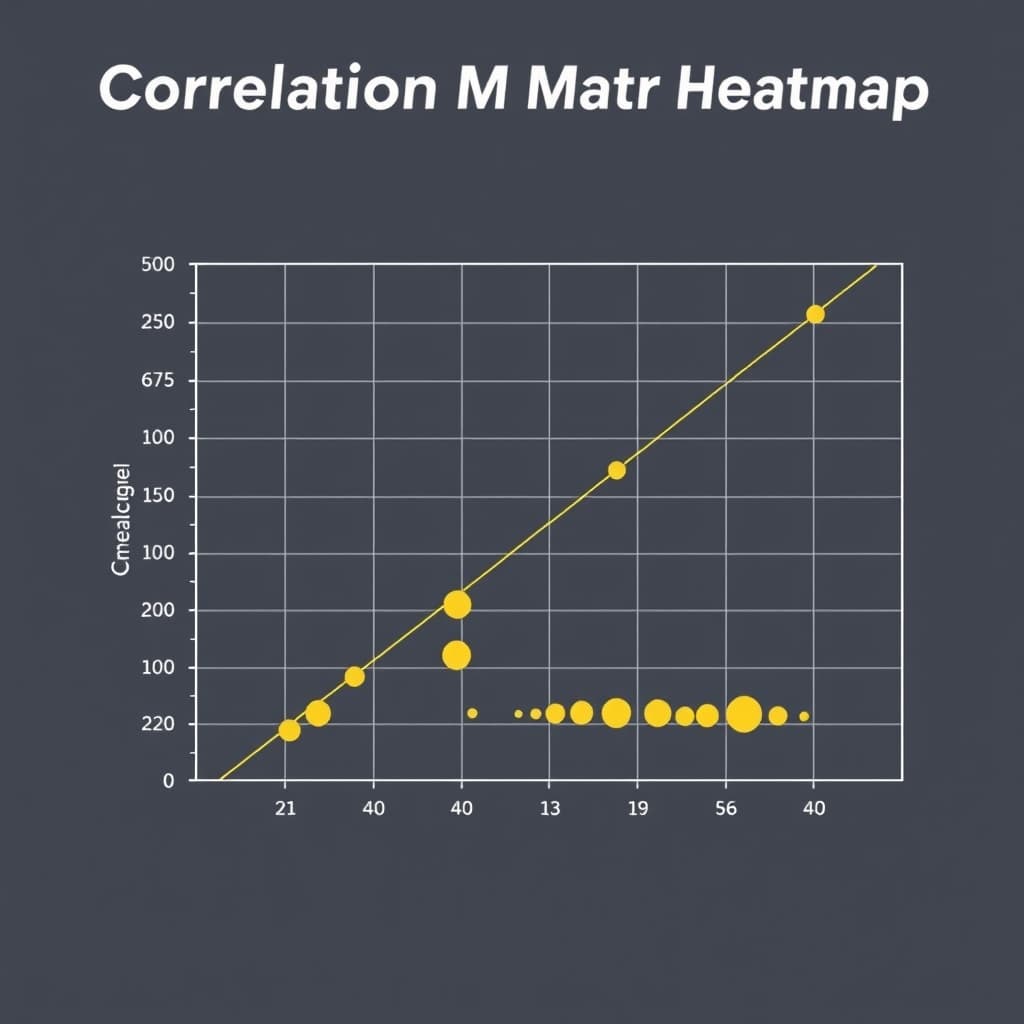
The data suggests PNUT has decoupled from the broader speculative frenzy. It is trading more like a legacy community token than a viral sensation. This reduces downside beta (it falls less when the market crashes) but also dampens upside explosive potential compared to newer assets.
Social volume for PNUT is down 90% from ATH, but engagement quality has improved. The "shillers" are gone. The remaining discourse on X (formerly Twitter) and Telegram focuses on community initiatives and nostalgic value. In the crypto economy, a dormant community is a liability, but a stubborn community is a call option. The survival of the PNUT brand through the crypto winter of late 2025 proves resilience, a quality the market often reprices aggressively during alt-season rotations.
The investment thesis for PNUT in Q1 2026 is a Deep Value / Mean Reversion play, not a growth narrative. The asset is trading at a support floor ($0.046) reinforced by significant whale accumulation and exhausted retail selling.
The risk-reward profile is asymmetric but dangerous.
Verdict: PNUT represents a viable "satellite" allocation (0.5% - 1% of portfolio) for sophisticated traders capable of managing on-chain execution risk. It is a bet on the persistence of the Solana meme ecosystem's history, rather than its future.
What factors are driving PNUT's price stability around $0.046? The stability suggests a balance between long-term holder retention and reduced speculative sell pressure. This "stalemate" is often characteristic of the accumulation phase in a mature meme asset's lifecycle, where the weak hands have already exited.
How does PNUT's liquidity compare to top-tier Solana assets? While significantly lower than major infrastructure tokens like JUP or SOL, PNUT maintains sufficient depth on decentralized exchanges like Jupiter for mid-sized retail orders ($1k-$10k). However, high-volume execution (>$50k) requires careful slippage management and algorithmic splitting of orders.
Loading comments...