


Beyond the Hype: How Institutional Discipline is Rewiring Bitcoin's Market Structure in 2026
The premise that Bitcoin’s value is driven by retail fervor and "laser-eyed" evangelism is a relic of a bygone era. If you are still analyzing price action through the lens of Google Trends or Twitter sentiment, you are trading a 2020 market in 2026. The reality of the current landscape is far more sterile and, frankly, more consequential: the "Lambo" phase is dead, replaced by the rigorous, unfeeling machinery of institutional allocation.
We are witnessing the operationalization of what WisdomTree and the post-restructuring Silicon Valley Bank (SVB) division have termed "Institutional Discipline." This is not merely about BlackRock or Fidelity holding assets; it is about the imposition of traditional financial market structure—volatility targeting, risk-parity models, and regulatory compliance—onto a bearer asset that was designed to resist them. The market has shifted from a venture-capital-style bet on adoption to a fixed-income-style bet on collateral utility.
The Mechanics of the 2026 'Year of Integration'
Silicon Valley Bank’s designation of 2026 as the "Year of Integration" is not a marketing slogan; it is a description of backend plumbing. For the past decade, "institutional adoption" meant a hedge fund opening a Coinbase Prime account. Today, it means full-stack API integration into banking cores.
Moving Beyond Simple Custody
The custody narrative is exhausted. The real friction in 2024 and 2025 was the disconnect between crypto-native rails and the legacy SWIFT/FedWire infrastructure. We have now moved into a phase where major banking cores (the FIS and Fiservs of the world) have embedded digital asset routing directly into their ledger systems.
This integration removes the "operational alpha" that crypto-native funds used to enjoy. When a regional bank can offer Bitcoin exposure via the same dashboard used for Treasury bonds—backed by the same insurance wrappers and audit trails—the premium for specialized crypto management evaporates. The barrier to entry has not just been lowered; it has been standardized.
Operational Efficiency Over Speculative Growth
The thesis driving this integration is no longer "number go up." It is "cost go down." Institutions are utilizing Bitcoin’s settlement finality to reduce the capital drag of T+1 or T+2 settlement cycles in other markets. The focus has shifted from Bitcoin as a speculative asset to Bitcoin as a settlement mechanism for other assets. This utility demands price stability, not exponential growth. Consequently, the largest inflows are no longer chasing breakouts; they are dampening them to ensure the collateral remains pristine.
Decoding WisdomTree’s Structural Shift Thesis
WisdomTree’s latest market analysis highlights a phenomenon that retail traders find infuriating: the compression of realized volatility. As liquidity deepens, the capacity for whales to move the market diminishes, but more importantly, the incentive to move the market changes.
Quantifying the Decline in Realized Volatility
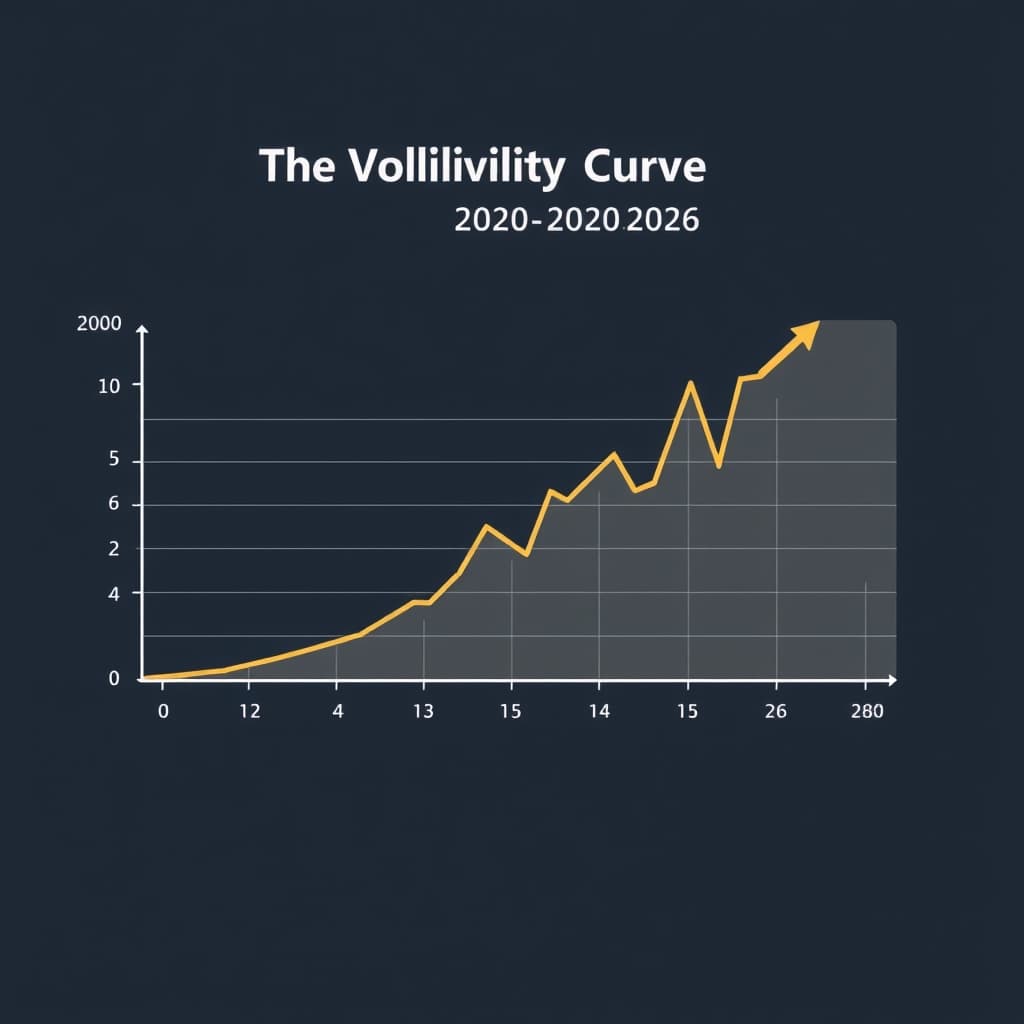
The data is unambiguous. Since the approval of the spot ETFs and the subsequent integration of options markets, Bitcoin’s 30-day realized volatility has trended downward, decoupling from the Nasdaq 100 and looking more like gold or even high-beta currencies. This is not a "bug"; it is the feature required for inclusion in sovereign wealth funds and pension mandates.
The Vanishing 'Retail Premium'
In previous cycles, spot prices frequently decoupled from macro realities due to retail leverage and exchange outages. That premium is gone. High-frequency trading (HFT) firms, now fully engaged with spot ETF liquidity, arbitrage these gaps in milliseconds. The "Kimchi Premium" or "Coinbase Premium" are now largely statistical noise, erased by algorithms that treat Bitcoin simply as another ticker in a risk-parity portfolio.
Algorithmic Risk Management vs. FOMO Buying
The most profound shift in 2026 is the dominance of non-discretionary flows. The market is no longer moved by humans making conviction bets, but by algorithms executing volatility-targeting strategies.
Volatility Targeting Strategies
Trillions of dollars in global assets are managed by funds that target a specific volatility level. When Bitcoin’s volatility was 80% annualized, these funds could only allocate basis points. As volatility compresses toward 20-30%, their models automatically dictate larger allocations.
However, this works both ways. These algorithms are programmed to sell when volatility spikes. This creates a ceiling on price appreciation. If Bitcoin rips 20% in a week, volatility targets are breached, and institutional algos force-sell to rebalance. This mechanism effectively decapitates the "god candles" of the past, replacing them with a slow, grinding ascent (or descent) that respects risk parameters.
Pension Fund Stress-Testing
Pension funds, now active participants, operate under strict regulatory frameworks requiring stress testing. They cannot hold assets that might draw down 70% in a month. The entry of these entities has forced the market structure to mature. We now see "volatility buffers" and structured products that cap upside in exchange for floor protection. This creates a massive supply of options selling, which further pins the price and suppresses volatility.
The Boring Bull Market: Bitcoin as Pristine Collateral
The narrative that Bitcoin is "digital gold" is insufficient. In 2026, Bitcoin is becoming "pristine collateral."
Decoupling from the 4-Year Halving Cycle
The 2024 halving was the last one that mattered for price mechanics. With the block subsidy now a fraction of the total supply issuance relative to daily volume, the supply shock argument is mathematically weak. The market is now demand-driven, specifically by the repo market and collateralized lending.
Integration into Standard 60/40 Portfolios
The 60/40 portfolio is dead; long live the 50/30/20 (Equities/Bonds/Alts). Bitcoin has secured its place in the "Alts" bucket, serving as a non-correlated hedge—not against inflation per se, but against monetary debasement. However, its correlation with global liquidity conditions has tightened. When central banks tighten, Bitcoin suffers. When they ease, it rallies. It has lost its idiosyncratic "crypto" behavior and adopted the behavior of a levered play on global M2 money supply.
The Trade-Off: Gentrification of the Order Book
We must acknowledge the cost of this maturity. The "Gentrification of Bitcoin" forces a choice between ideological purity and price appreciation.
What Would Change My Mind?
My thesis rests on the continued dominance of regulated capital flows. However, two "Black Swan" scenarios could shatter this institutional discipline. First, a catastrophic failure of the ETF custody layer (e.g., a Coinbase Prime breach) would trigger a mass exodus of institutional capital, returning the market to the wild west of self-custody. Second, a hyper-inflationary event in a G7 nation could break the correlation between Bitcoin and risk assets, causing a retail-led "flight to safety" that overrides algorithmic suppression. Until then, the algorithms remain in charge.
Conclusion
Bitcoin in 2026 is becoming boring, and that is the most bullish signal for its longevity. The asset has successfully graduated from a venture-style bet to a foundational layer of global finance. For the adrenaline junkies and volatility farmers, the party is over. For those seeking a permanent, censorship-resistant store of value integrated into the global economy, the work has just begun. The "Year of Integration" is not about hype; it is about the quiet, irreversible entanglement of Bitcoin with the world's balance sheets.
FAQ
What does WisdomTree mean by 'Institutional Discipline'? It refers to the application of traditional financial rigor—such as strict risk limits, automated rebalancing protocols, and regulatory compliance—to crypto assets. This approach replaces emotional, high-frequency retail trading with systematic, long-term allocation strategies.
How does the 'Year of Integration' affect Bitcoin price volatility? As institutions integrate Bitcoin into automated portfolio management systems, buy and sell orders become more systematic and liquidity deepens. This creates a "volatility dampener," where algorithms sell into strength and buy into weakness to maintain target allocations, significantly reducing the magnitude of price swings.
Sources
- U.S. Securities and Exchange Commission (SEC) - Rulemaking & Filings
- WisdomTree - Crypto & Digital Assets Research
- Silicon Valley Bank (First Citizens Division) - Market Insights
- Bank for International Settlements (BIS) - Prudential treatment of cryptoasset exposures
- Fidelity Digital Assets - Investment Thesis
Loading comments...
Related
View all →


Crypto
Enterprise Stablecoin Inflection: Why Corporate Finance is Nearing its 'ChatGPT Moment'
March 28, 2026
...